
Nissan Murano: Transmission Assembly / All Wheel Drive
Removal
WARNING:
Do not remove the radiator cap when the engine is hot. Serious burns could occur from high pressure engine coolant escaping from the radiator. Wrap a thick cloth around the cap. Slowly turn it a quarter turn to allow built-up pressure to escape. Carefully remove the cap by turning it all the way.
CAUTION:
-
Perform when the engine is cold.
-
When replacing the TCM and transaxle assembly as a set, replace the transaxle assembly first and then replace the TCM. Refer to Description.
-
When replacing the transaxle assembly, perform "ADDITIONAL SERVICE WHEN REPLACING TRANSAXLE ASSEMBLY". Refer to Description.
 NOTE:
NOTE:
When removing components such as hoses, tubes/lines, etc., cap or plug openings to prevent fluid from spilling.
Remove battery tray. Refer to Removal and Installation.
Remove the cowl top cover and the cowl top extension. Refer to Removal and Installation - Cowl Top Extension.
Remove engine room cover. Refer to Removal and Installation.
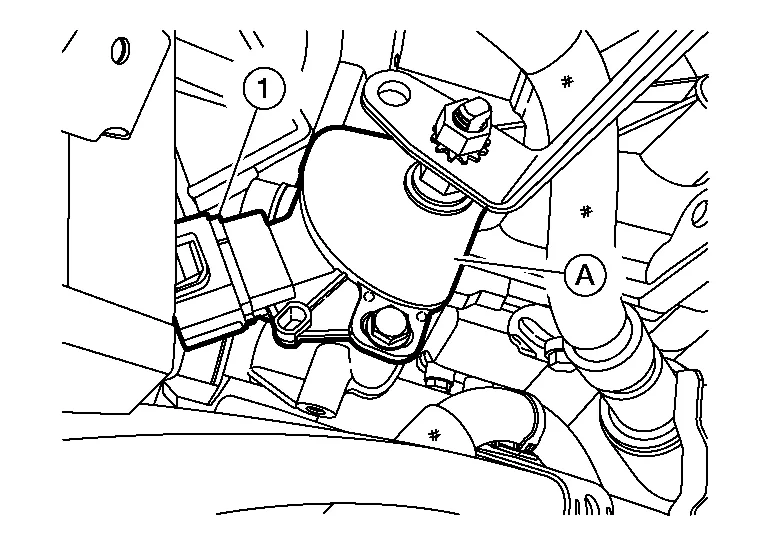
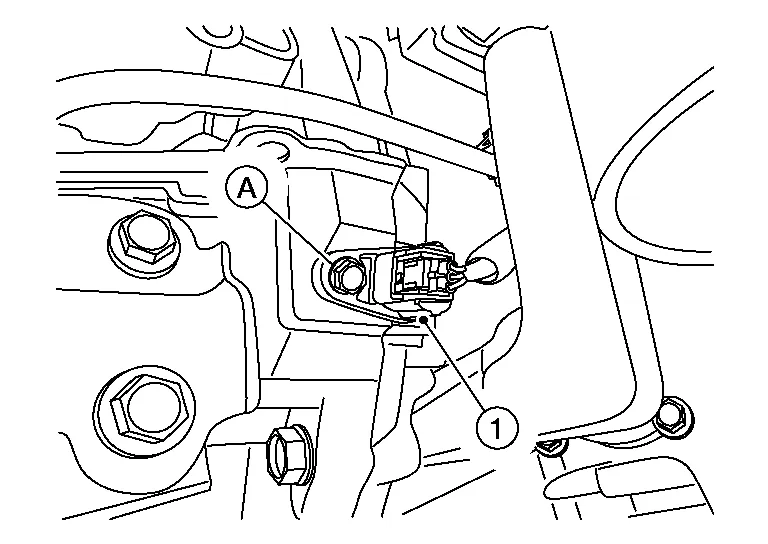
Disconnect the harness connector (A) from the transmission range switch (1).
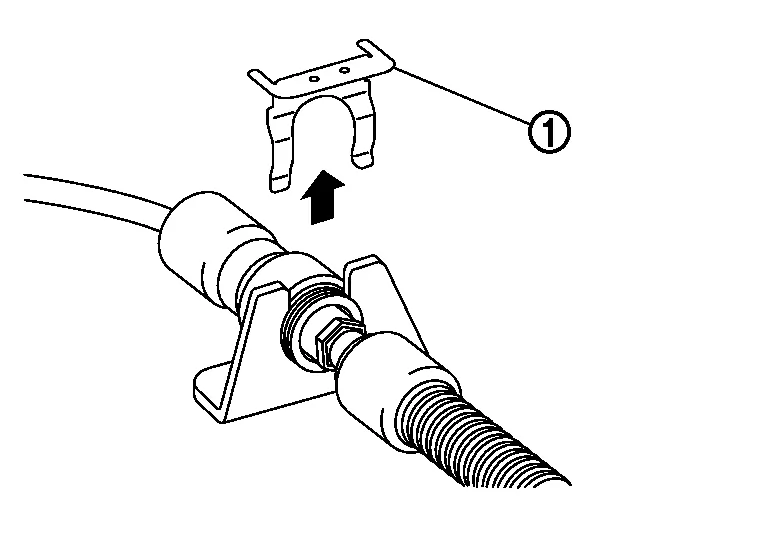
Remove lock plate (1) as shown.
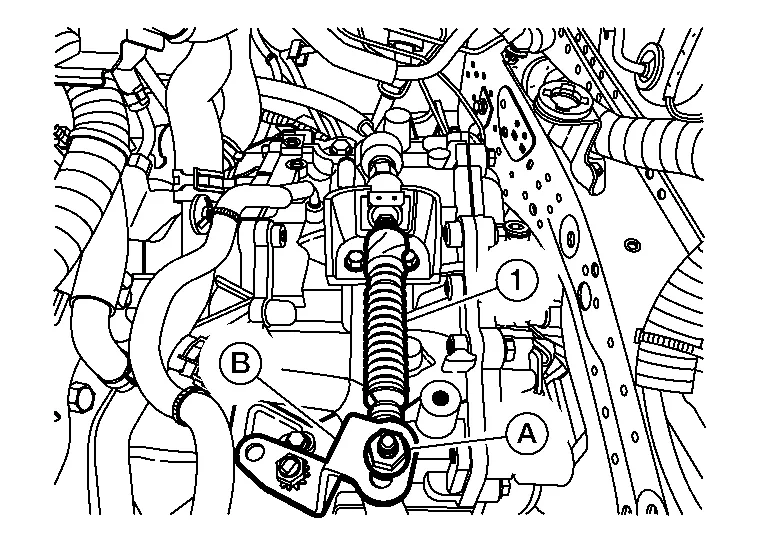
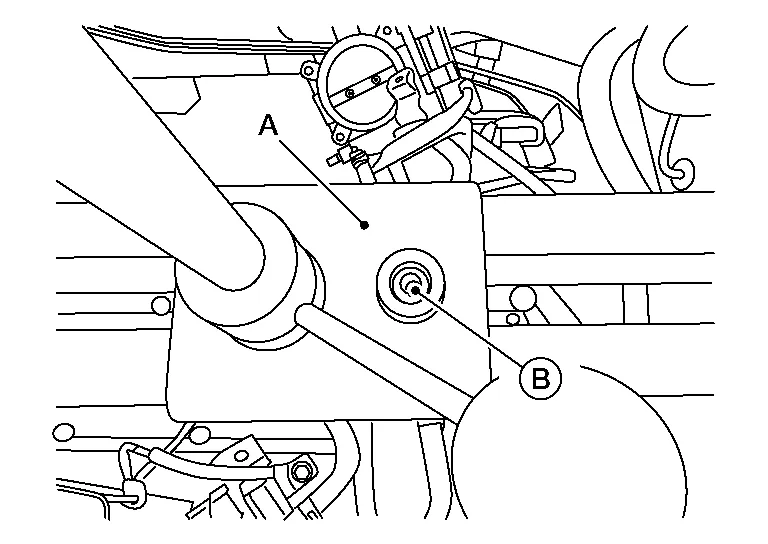
Remove nut (A) and separate control cable (1) from the manual lever (B).
Disconnect brake booster vacuum hose from intake manifold collector. Refer to Exploded View.
Disconnect PCV hose from intake manifold collector.
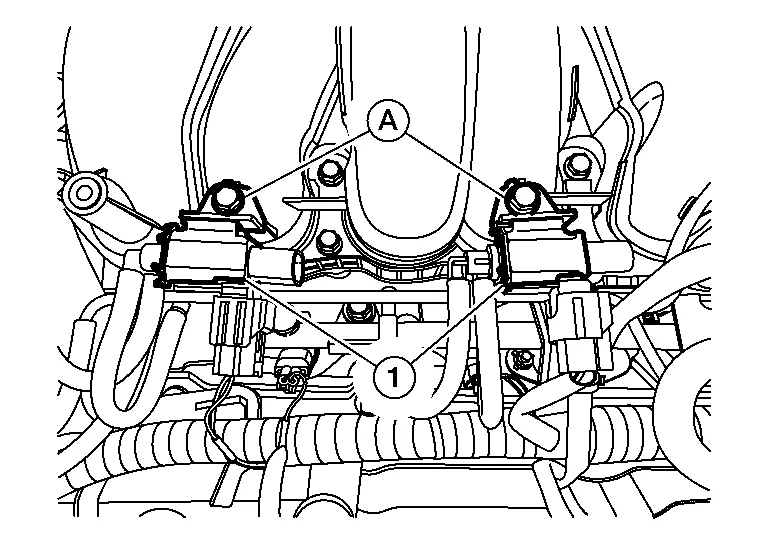
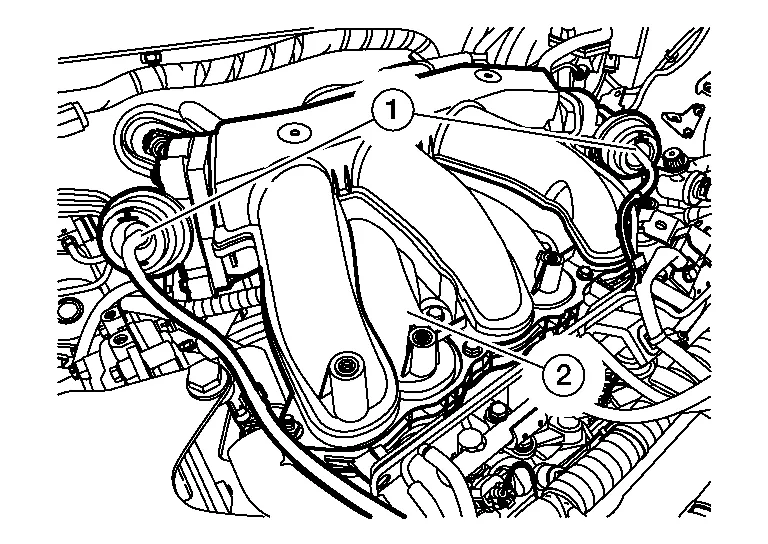
Remove bolts (A) and set VIAS control solenoid valves (1) aside.
Disconnect vacuum hoses (1) from intake manifold collector (2).
Disconnect vacuum hose (1) from vacuum pipe (2).
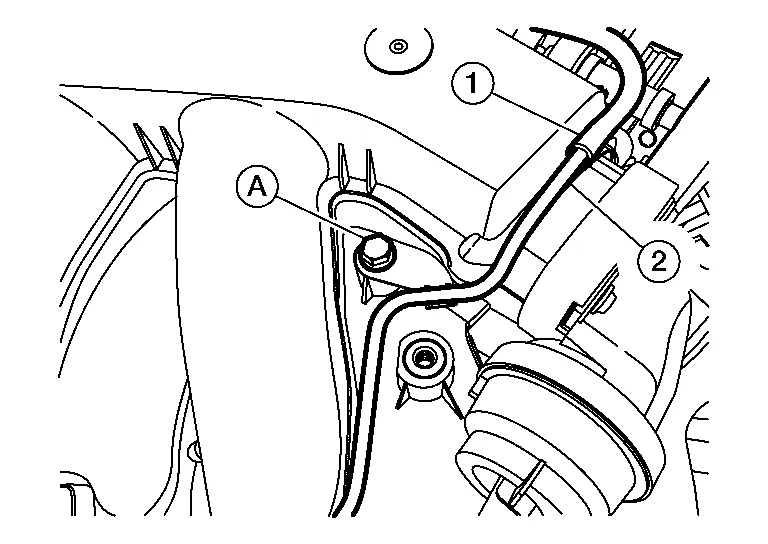
Remove bolt (A).
Remove clamp (1) and disconnect hose (2) from pipe (3).
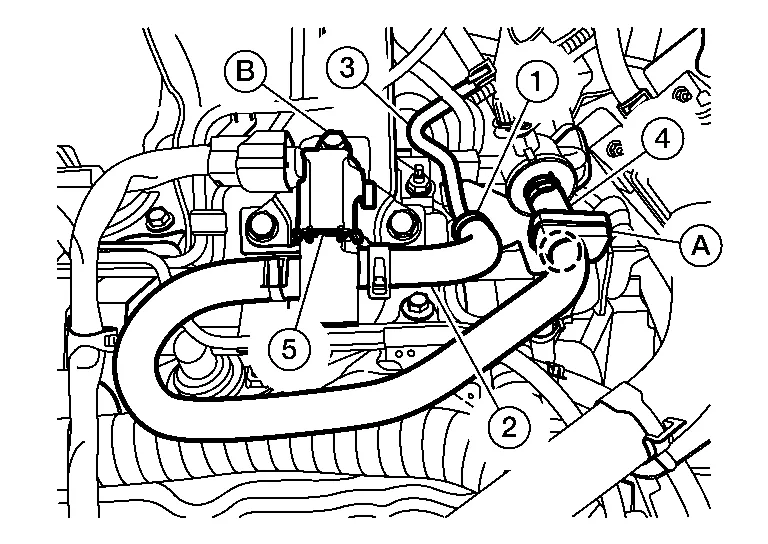
Using suitable tool, release pawl and remove hose (4) from retainer (A).
 |
: Pawl |
Remove bolt (B) and set EVAP canister purge volume control solenoid (5) aside.
Set vacuum tube assembly (1) aside.
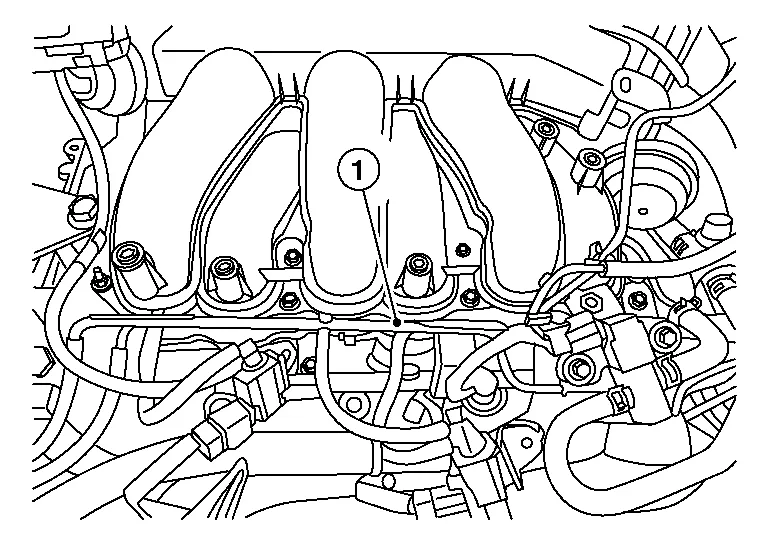
Loosen bolts in reverse of sequence shown and remove electric throttle control actuator bolts, then remove electric throttle control actuator and position aside.

CAUTION:
-
Handle carefully to avoid any shock to the electric throttle control actuator.
-
Do not disassemble electric throttle control actuator.
Remove bolt (A) and set bracket (1) aside.
Loosen the intake manifold collector bolts and nuts in reverse of the sequence shown, then remove the intake manifold collector and gasket.
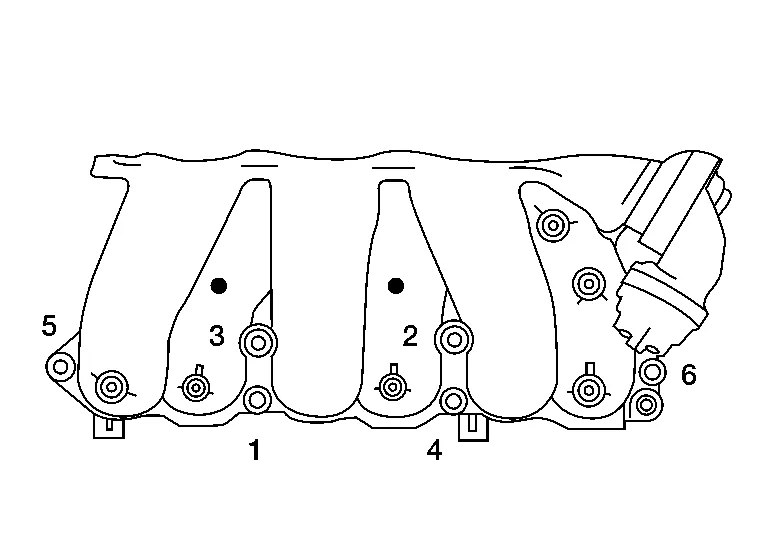
CAUTION:
Do not reuse intake manifold collector gasket.
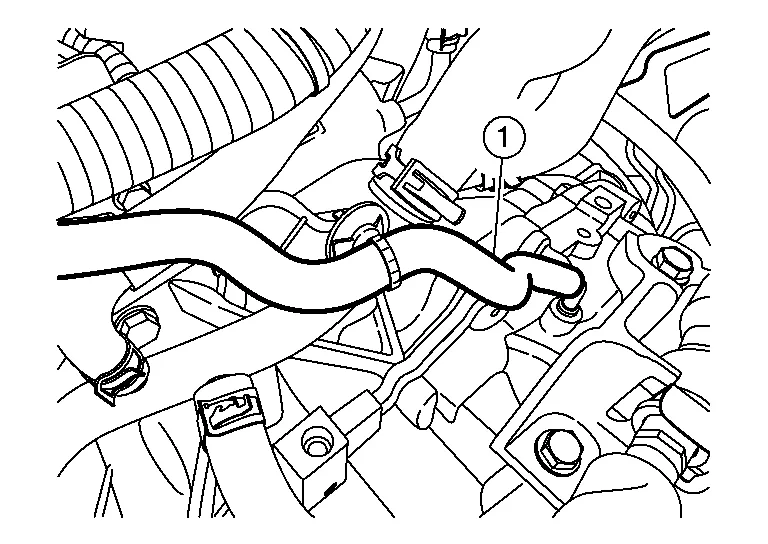
Disconnect transaxle breather hose (1) from transaxle assembly.
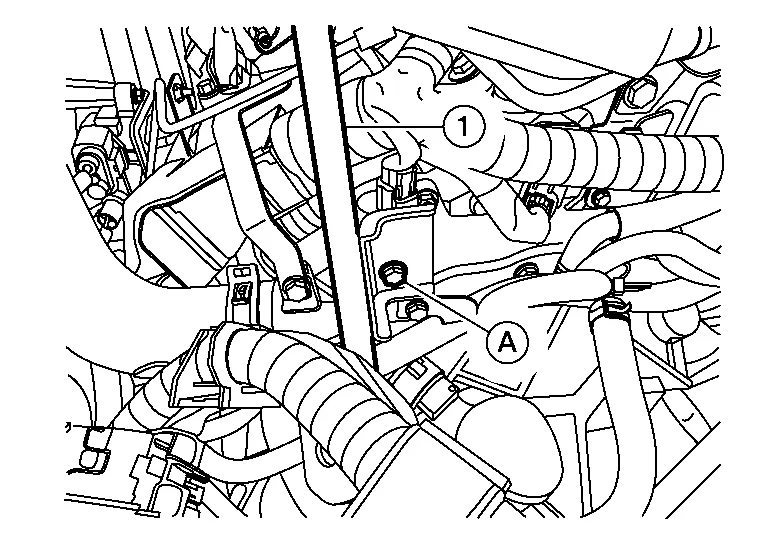
Remove bolt (A) from CVT charge pipe (1).
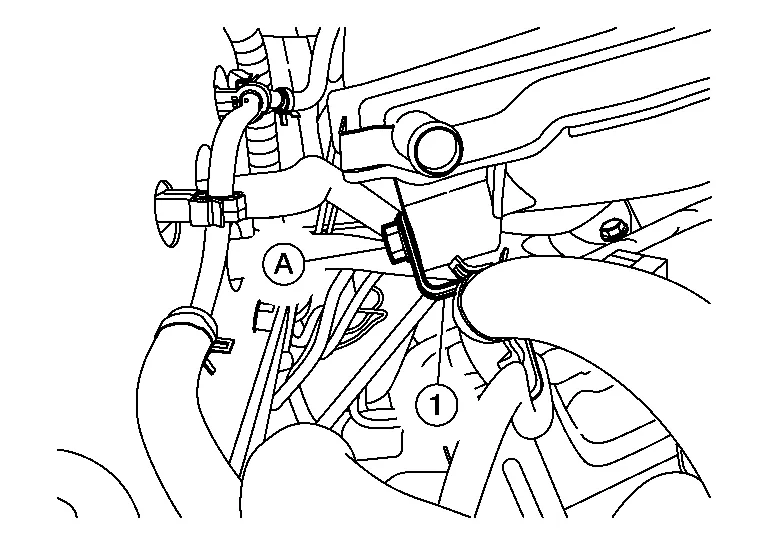
Remove bolt (A) from upper torque rod.
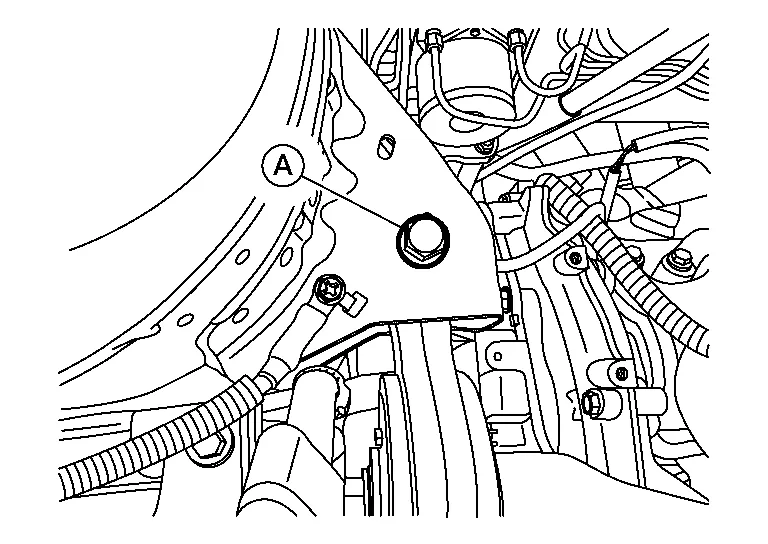
Disconnect air fuel ratio sensor 1 (bank 1) and remove exhaust manifold cover (bank 1). Refer to Exploded View.
Remove top nuts from three way catalyst (bank 1). Refer to Exploded View.
Remove fuel tube bolts (A).

Remove CVT gusset bolt (A).
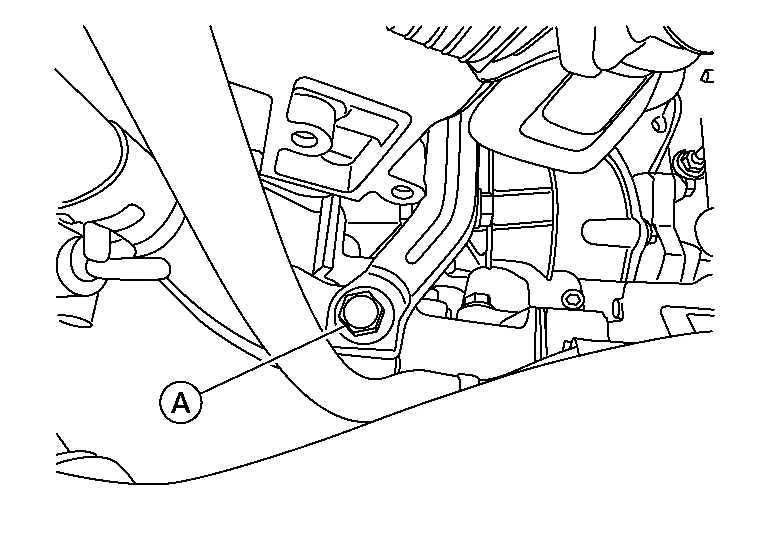
Remove bolts (A).

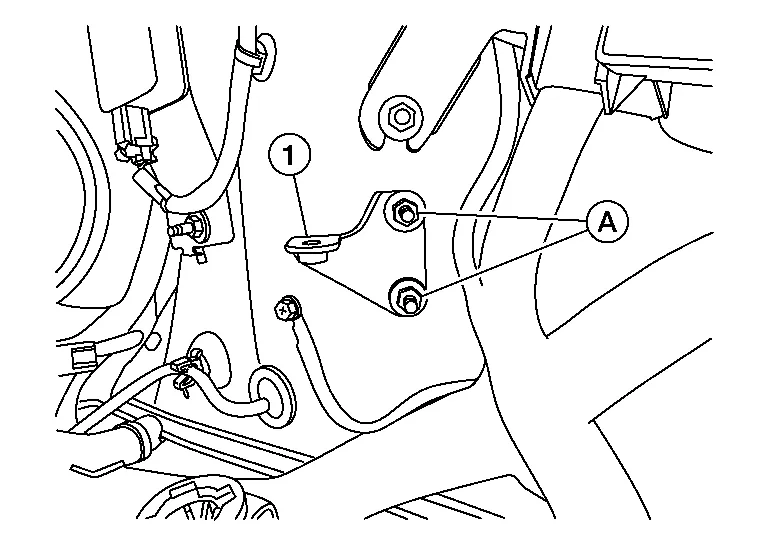
Remove nuts (A) and bracket (1).
Using a suitable tool, release clip.
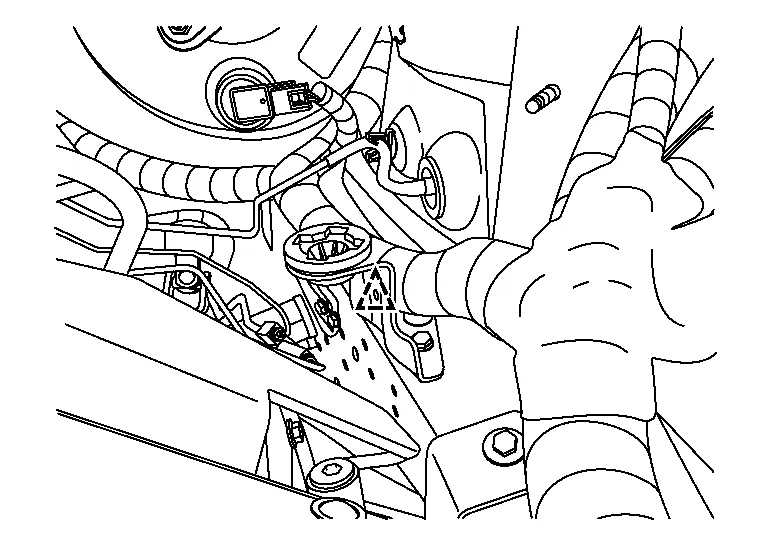
 |
: Clip |
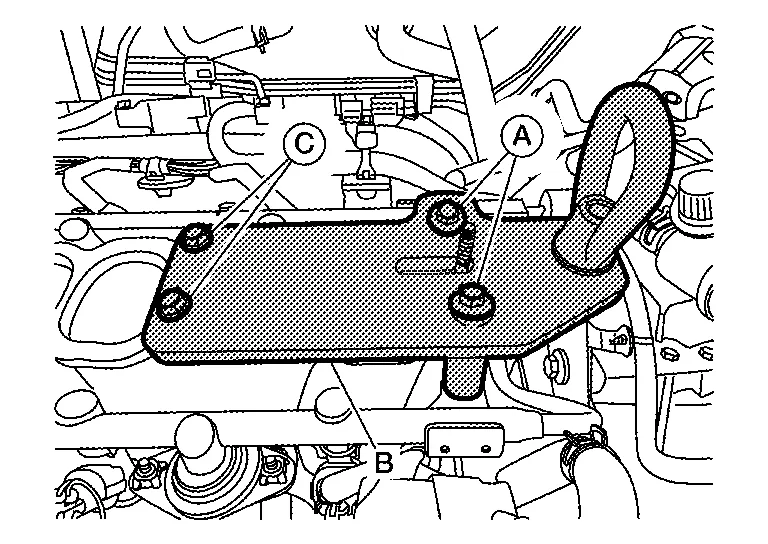
Install Tool (B) using bolts (A) and (C) supplied with Tool. Tighten bolts to specification. Refer to Engine Support Tool Operating Instructions.
| Tool (B) | : (J-52604) |
| Bolts (A) | : 20 N·m (2.0 kg-m, 15 ft-lb) |
| Bolts (C) | : 11 N·m (1.1 kg-m, 8 ft-lb) |
Install Tool (A) to drivers side frame rail (1) as shown. Refer to Engine Support Tool Operating Instructions.
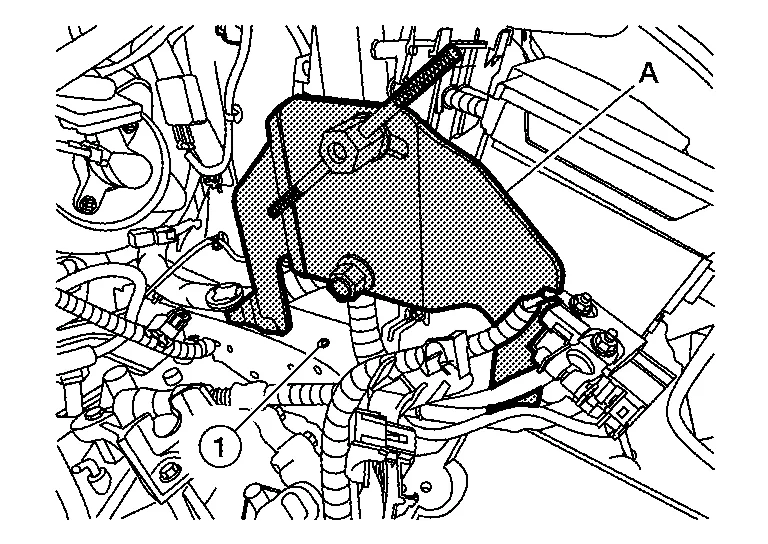
| Tool (A) | : (J-52389) |
Install Tool (A) on top of engine mounting insulator [RH (1)] as shown. Refer to Engine Support Tool Operating Instructions.
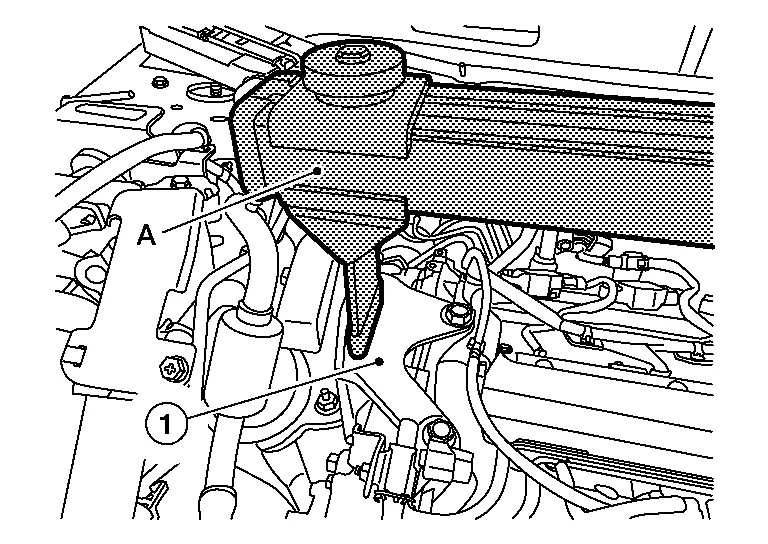
| Tool (A) | : (J-52389) |
Install Tool (A) to Tool (B). Refer to Engine Support Tool Operating Instructions.
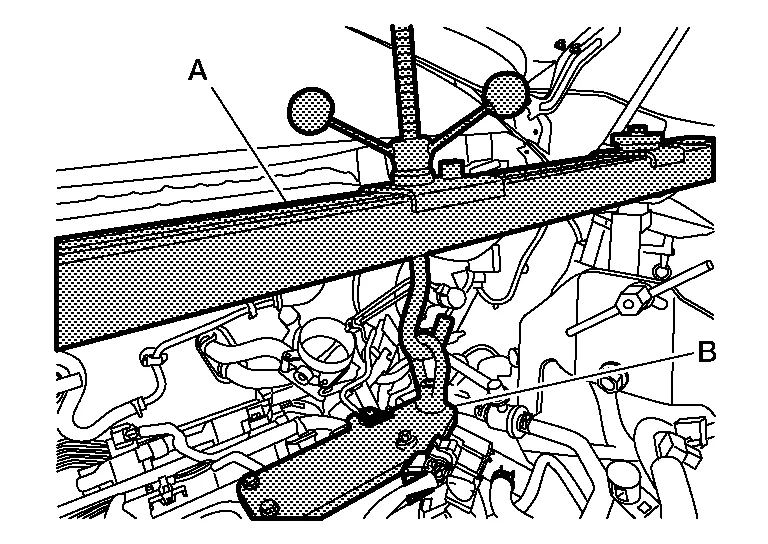
| Tool (A) | : (J-52389) |
| Tool (B) | : (J-52604) |
Using bubble level (B) on Tool (A) level Tool as shown. Refer to Engine Support Tool Operating Instructions.
| Tool (A) | : (J-52389) |
Remove nut from engine mounting insulator (rear). Refer to Exploded View.
Remove front under cover. Refer to Removal and Installation.
Remove the front wheels and tires using power tool (LH/RH).
Remove the lock plates [A (LH/RH)] and remove brake hoses from struts.
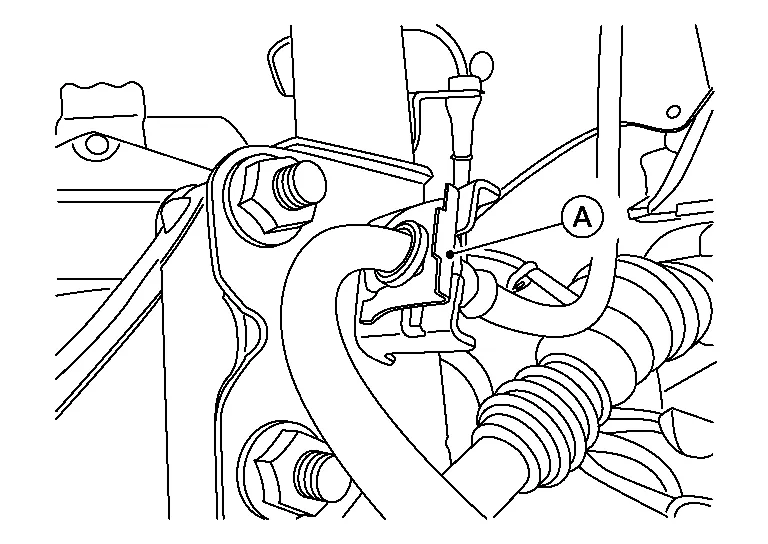
Remove nuts and separate stabilizer connecting rods from struts (LH/RH). Refer to Exploded View.
Remove the brake caliper torque member bolts, leaving brake hoses attached. Position the brake calipers aside with wire (LH/RH). Refer to Exploded View.
CAUTION:
Do not depress brake pedal while brake calipers are removed.
Put alignment (A) marks on disc brake rotors and on the wheel hub and bearings. Remove the disc brake rotors (LH/RH).

CAUTION:
Do not drop the disc brake rotors.
Remove wheel sensor bolts (A) and position wheel sensors aside (LH/RH).

CAUTION:
Do not pull on wheel sensor harness.
Remove cotter pins from front drive shafts (LH/RH).
Remove the nut retainers from front drive shafts (LH/RH).
Loosen the wheel hub lock nuts from the drive shafts using power tool (LH/RH).
Using a piece of wood and a suitable tool, tap on the wheel hub lock nuts to disengage the drive shafts from the wheel hub and bearings (LH/RH).

CAUTION:
-
Do not place drive shaft joints at an extreme angle. Be careful not to over extend slide joints.
-
Do not allow drive shafts to hang without support.
NOTE:
Use suitable puller if drive shafts cannot be separated from wheel hub and bearings.
Remove the wheel hub lock nuts (LH/RH).
CAUTION:
Do not reuse wheel hub lock nuts.
Remove the lower strut bolts and nuts. Separate the steering knuckles from the struts (LH/RH). Refer to Exploded View.
Remove bearing retainer to support bearing bracket bolts (RH only).
Insert suitable tool (A) between the drive shafts and transaxle. Remove the drive shafts from the transaxle (LH/RH).
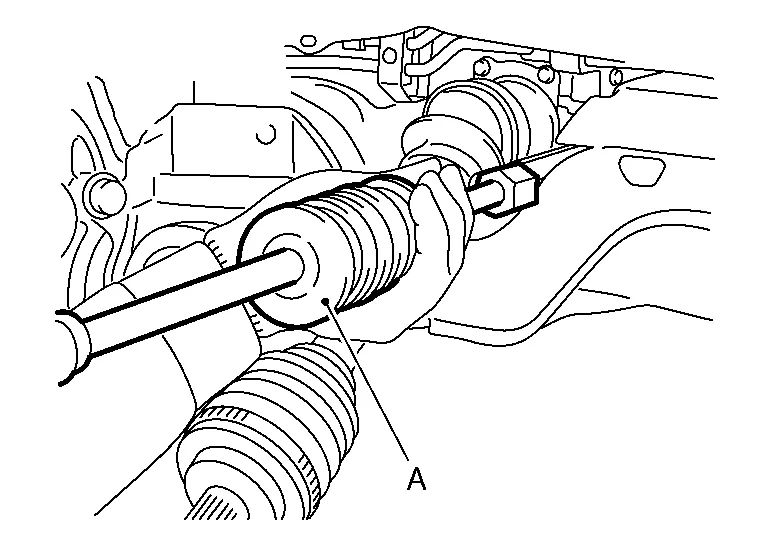
CAUTION:
-
Confirm that the circular clips are attached to the drive shafts.
-
Do not place drive shaft joints at extreme angles when removing drive shafts. Also be careful not to overextend slide joints.
-
Do not reuse circular clips.
| Tool (A) | Drive shaft joint puller (Commercially available) |
Remove the differential side oil seals (LH/RH).
CAUTION:
Do not reuse differential side oil seals.
Remove nut and separate stabilizer connecting rods from struts (LH/RH). Refer to Exploded View.
Remove outer socket cotter pins (LH/RH). Refer to Exploded View.
CAUTION:
Do not reuse outer socket cotter pins.
Loosen the outer socket nuts and separate outer sockets from the steering knuckles (LH/RH) using ball joint remover (commercially available).
CAUTION:
Leave the outer socket nuts half threaded on the outer sockets to prevent damage to threads and to prevent the tool from coming off suddenly.
Remove the outer socket nuts and separate the outer sockets from the steering knuckles (LH/RH).
Remove front fender protector side covers (LH/RH). Refer to Exploded View.
Remove front fender protectors (LH/RH). Refer to Exploded View.
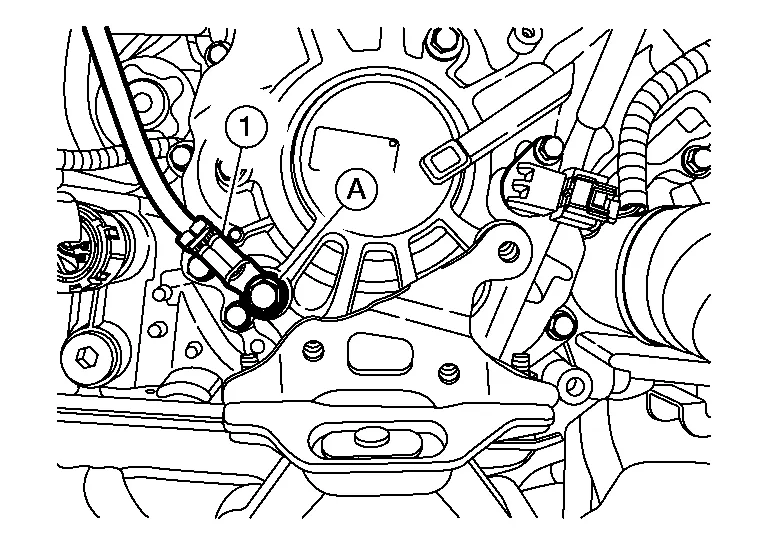
Remove bolt (A) and position crankshaft position sensor (1) aside.
Remove the front exhaust tube. Refer to Exploded View.
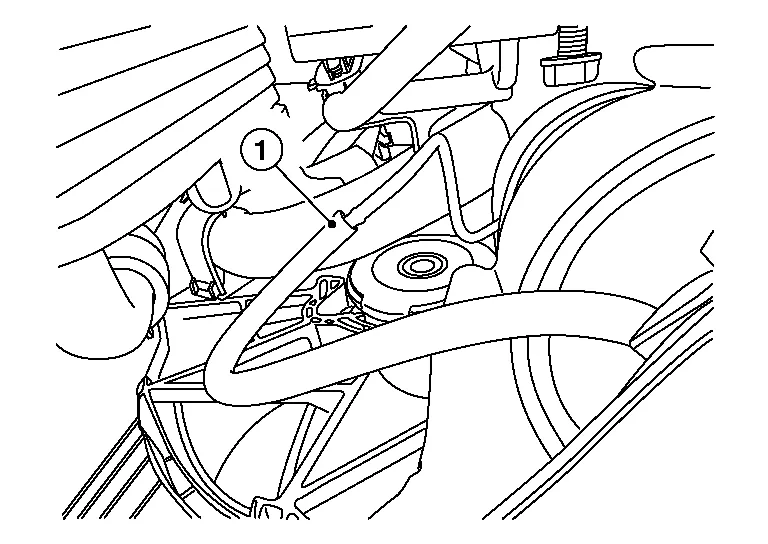
Disconnect the front engine mount insulator vacuum hose (1).
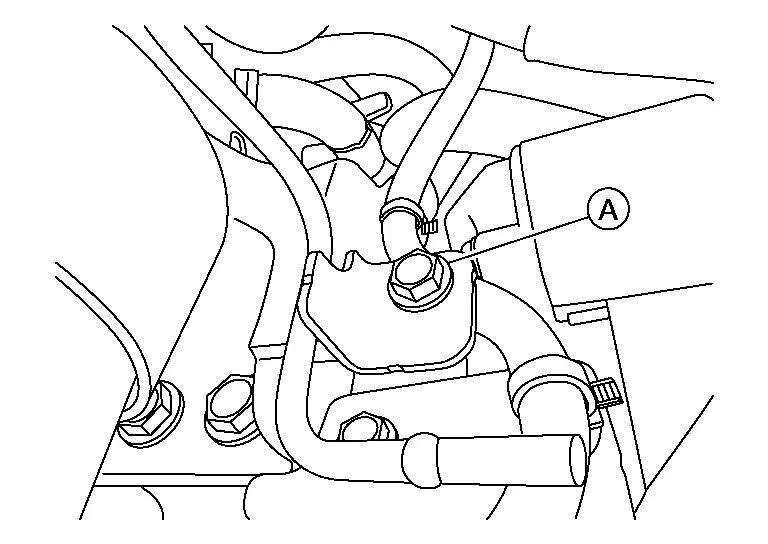
Remove bolt (A) from engine mounting insulator (front) pipe bracket.
Remove engine mounting insulator (front). Refer to Exploded View.
Remove bolt (A) and set bracket (1) aside.

Remove bolt (A) and remove rear plate cover (1).
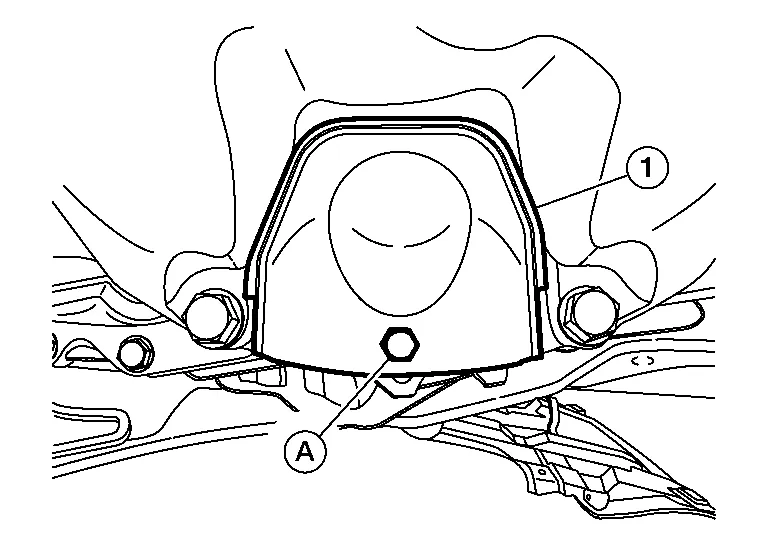
Hold drive plate with a suitable tool and remove torque converter nuts. Refer to Exploded View.
Drain power steering fluid. Refer to Draining and Refilling.
Using a suitable tool, release clip.
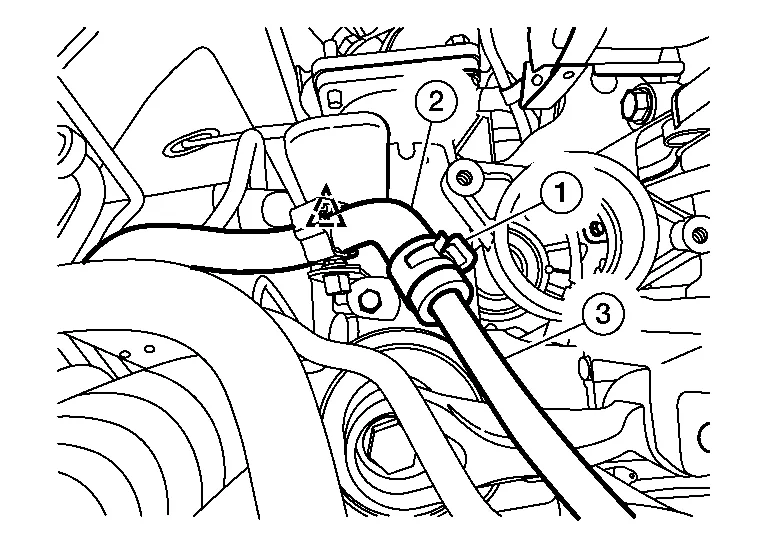
|
: Clip |
Release hose clamp (1) and separate the high pressure piping [lower (2)] from the low pressure piping [upper (3)].
Remove the power steering tube bracket bolts. Refer to Exploded View.
NOTE:
There are 3 bolts on the suspension member for the power steering tubes.
Using a suitable tool, release the retainer (A).
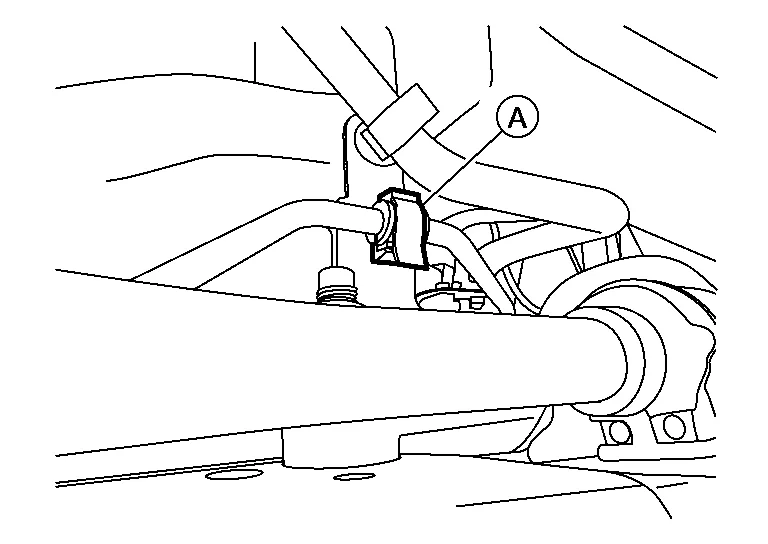
Separate the high pressure piping (A) from the steering gear (1).
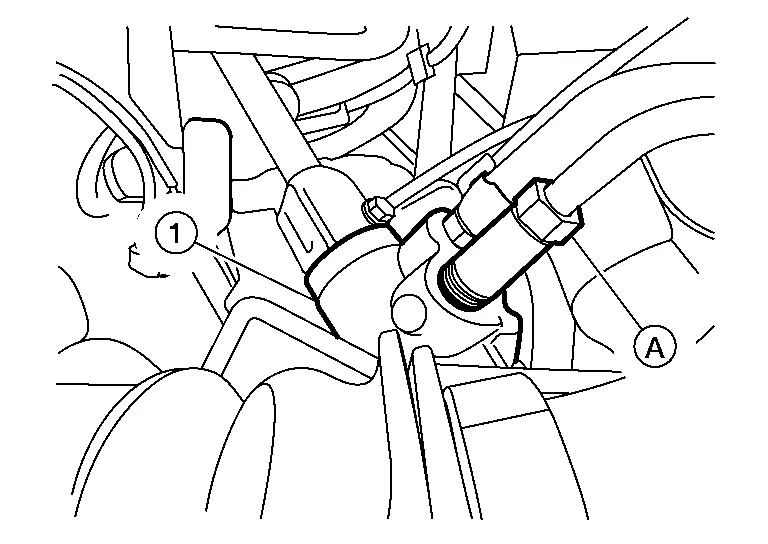
Remove lower bolt and separate the steering intermediate shaft from the steering gear.
CAUTION:
With the steering linkage disconnected, the spiral cable may snap by turning the steering wheel beyond the limited number of turns. Secure the steering wheel during removal.
Remove bolts (A) and (B) and remove rear propeller shaft heat shield (1).
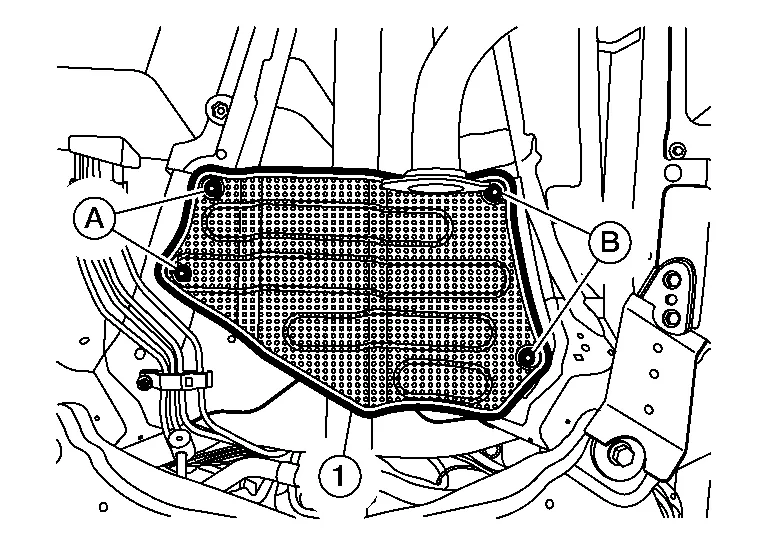
Remove bolts and disconnect rear propeller shaft from transfer assembly. Refer to Exploded View.
Using suitable wire, secure the rear propeller shaft.
Remove bolts (A) from transaxle mount.
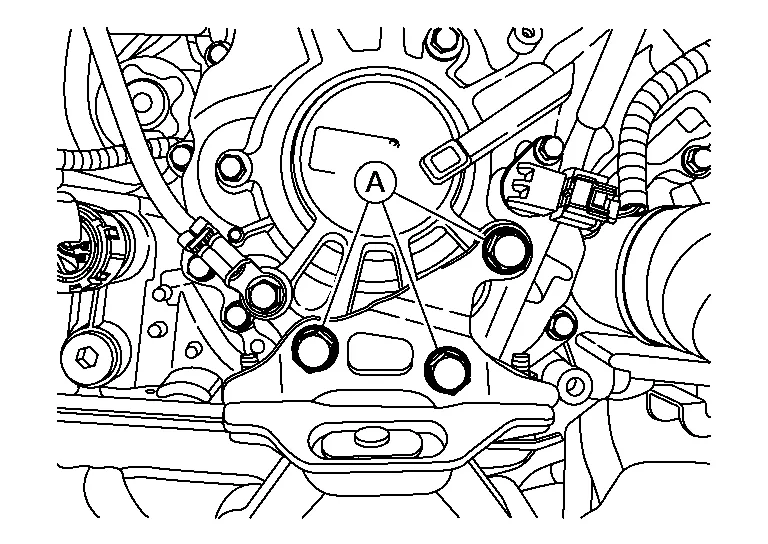
Remove bolt (A) and position ground (1) aside.
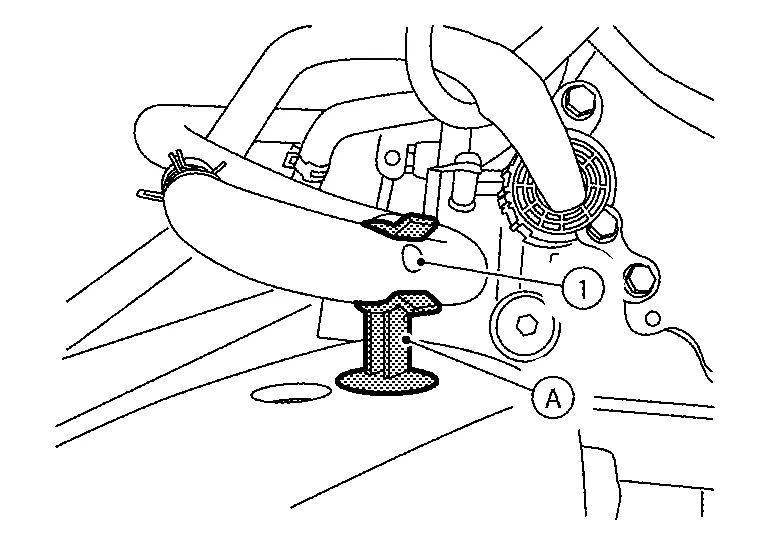
Remove water hose (1) from retainer (A).
Remove rear torque rod bolt. Refer to Exploded View.
Set hydraulic lift table (A) or equivalent tool under front suspension member.
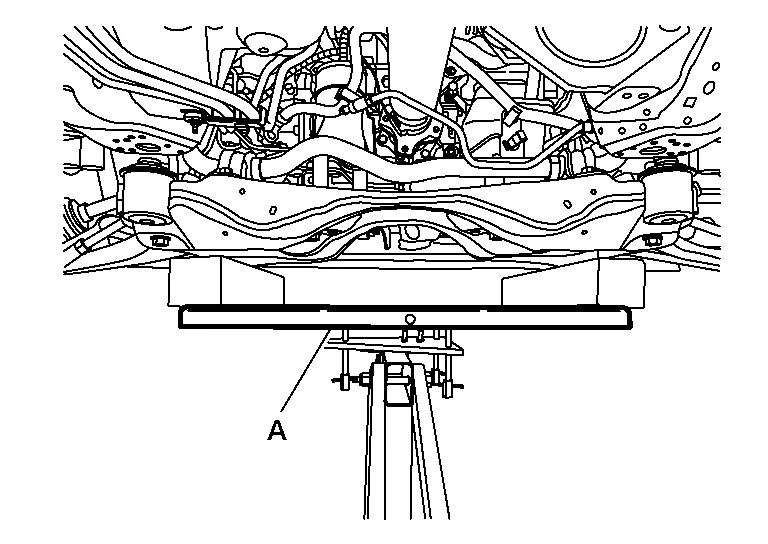
Remove front suspension member bolts and front suspension member stays. Refer to Exploded View.
CAUTION:
Secure front suspension member to hydraulic lift table (or equivalent tool) while removing it.
Lower the front suspension member.
Remove bolt from heater thermostat bracket. Refer to Exploded View.
Drain engine coolant. Refer to Changing Engine Coolant.
Remove CVT fluid cooler hose A and CVT fluid cooler hose D from the CVT oil warmer. Refer to Exploded View.
Remove CVT water hose A and CVT water hose B from CVT oil warmer. Refer to Exploded View.
Disconnect the harness connector (A) from heated oxygen sensor 2 (bank 2).
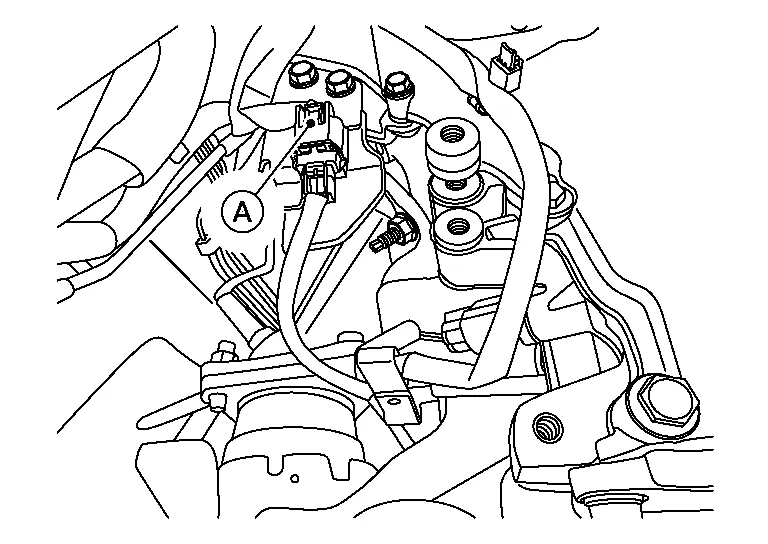
Separate the harness (1) from the bracket (2).
Remove bottom bolts from three way catalyst (bank 1). Refer to Exploded View.
NOTE:
Removal of the exhaust manifold is not necessary.
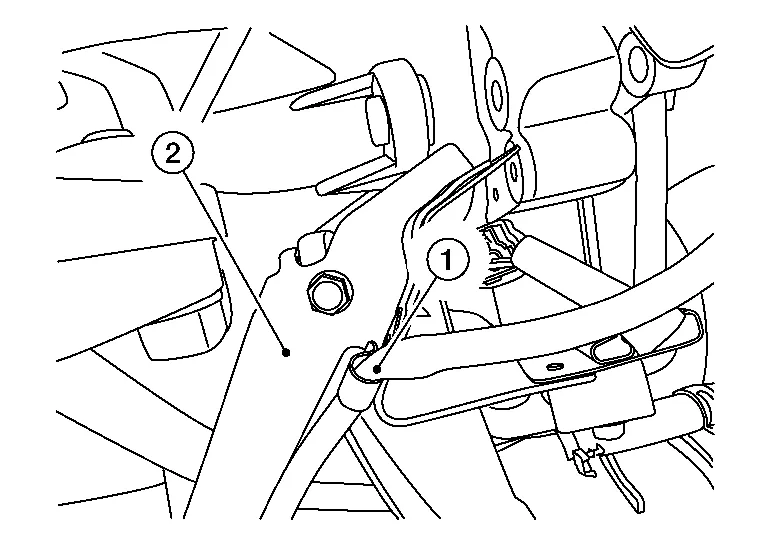
Remove bolts (A) and remove engine mount bracket [rear (1)].
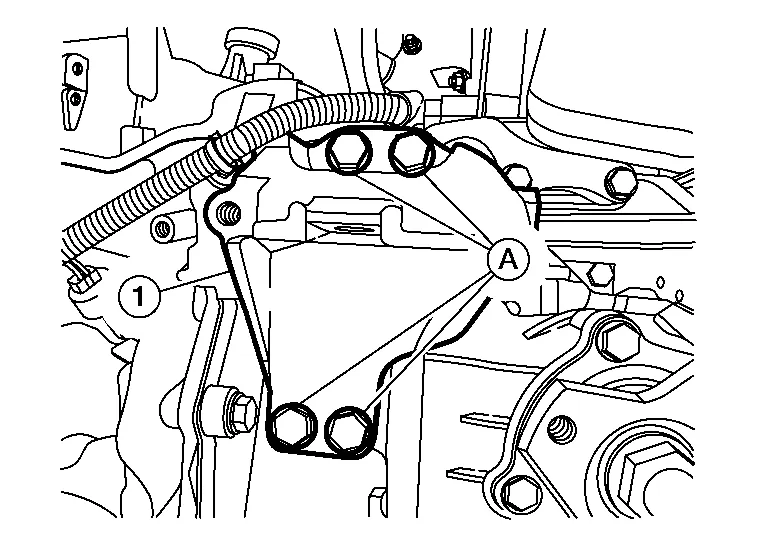
Remove rear gusset and transfer gusset. Refer to Exploded View.
Remove bolts (A), (B) and (C).
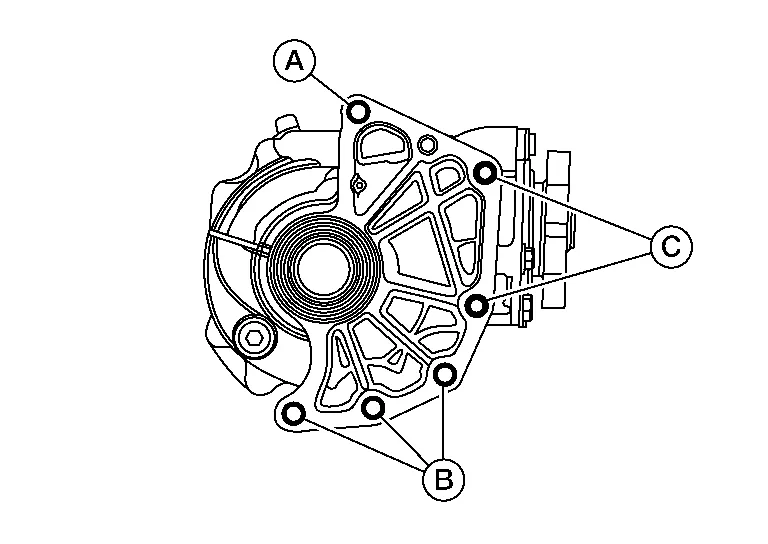
CAUTION:
Do not damage oil seal inside of CVT.
Remove transfer assembly from the Nissan Murano vehicle.
Using Tools lower engine and transaxle assembly until the transaxle assembly is low enough to clear driver’s side frame rail.
| Tool numbers | : (J-52389, J-52604) |
Disconnect the harness connector from the starter motor "S" terminal. Refer to Exploded View.
Remove nut and remove "B" terminal harness and position aside. Refer to Exploded View.
Remove starter motor bolts and remove starter motor. Refer to Exploded View.
Using a suitable tool, release the clip.
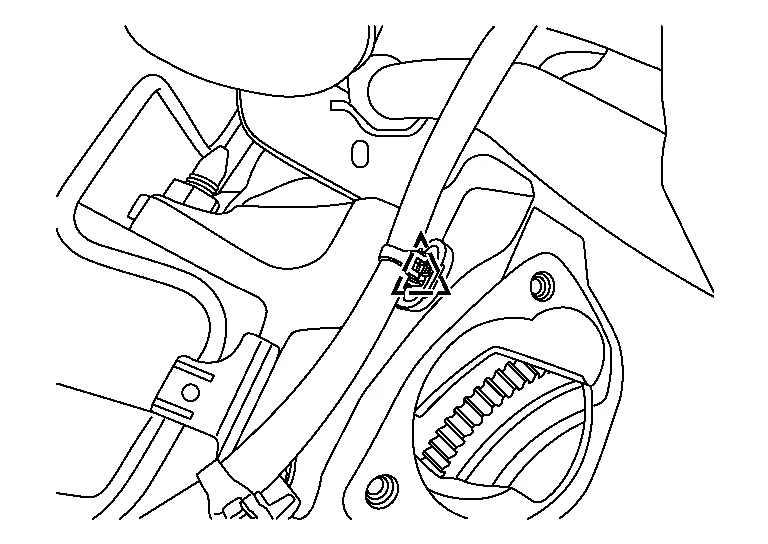
|
: Clip |
Remove bolt (A) and remove CVT fluid charging pipe (1).
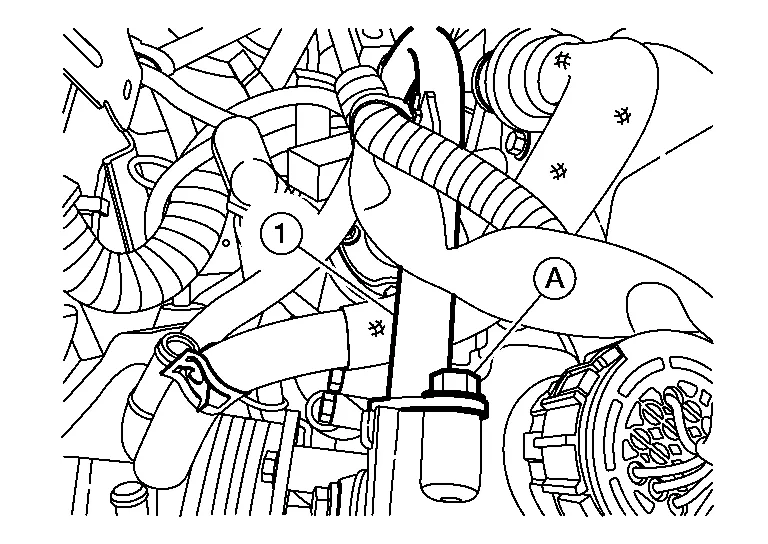
Separate the harness retainers from the transaxle assembly.
Disconnect the harness connector (A) from the transaxle assembly.

Disconnect the harness connector from the output speed sensor. Refer to Exploded View.
Disconnect the harness connector from the primary speed sensor. Refer to Exploded View.
Disconnect the harness connector from the input speed sensor. Refer to Exploded View.
Support transaxle assembly using a suitable transmission jack and Tool.
| Tool number | : (J-51307) |
CAUTION:
-
Always secure transaxle assembly to transmission jack.
-
Do not lift or support transaxle assembly using the bottom of oil pan or damage can occur.
Remove bolts (A), (B), (C), and (D).
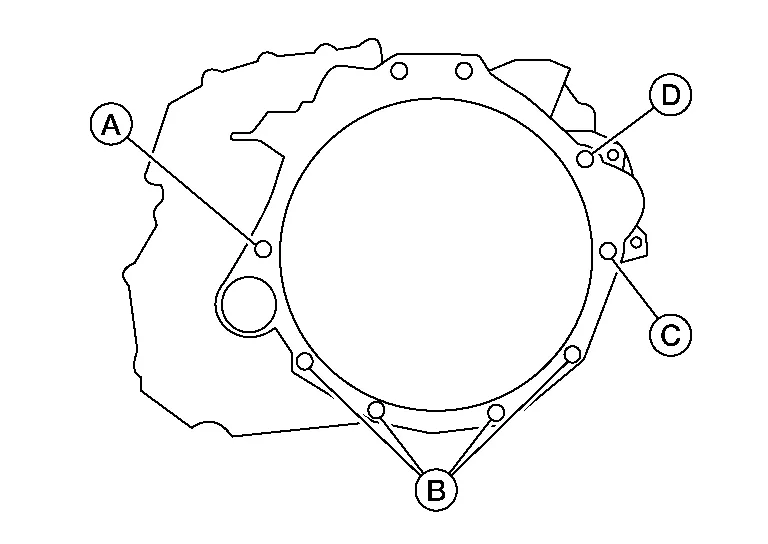
Separate the transaxle assembly from the engine assembly and lower transaxle assembly.
CAUTION:
Secure the torque converter to the transaxle while removing transaxle to prevent torque converter from falling.
INSTALLATION
Installation is in the reverse order of removal.
If replacing CVT, flush the CVT fluid cooler and lines. Refer to CVT Fluid Cooler Flush.
Perform inspection before installation. Refer to "Inspection Before Installation" below.
NOTE:
-
If the same transaxle assembly will be reinstalled, replace differential side oil seals (LH/RH). Refer to Exploded View.
-
If a new transaxle assembly is being installed, write down the serial number of the new transaxle assembly.

CAUTION:
-
When replacing an engine or transaxle you must make sure any dowels are installed correctly during re-assembly
-
Improper alignment caused by missing dowels may cause vibration, oil leaks or breakage of drivetrain components.
-
Do not reuse O-rings or copper sealing washers.
-
When turning crankshaft, turn it clockwise as viewed from the front of the engine.
-
When tightening the nuts for the torque converter while securing the crankshaft pulley bolt, be sure to confirm the tightening torque of the crankshaft pulley bolt. Refer to Removal and Installation.
-
After torque converter is installed to drive plate, rotate crankshaft several turns to check that CVT rotates freely without binding.
-
When installing the CVT to the engine, align the matching mark on the drive plate with the matching mark on the torque converter.
-
Do not reuse differential side oil seals.
-
When installing the CVT to the engine, align the matching mark on the drive plate with the matching mark on the torque converter.
NOTE:
-
When installing the drive plate to torque converter nuts, tighten them temporarily. then tighten the nuts to the specified torque. Refer to Exploded View.
-
Install the transaxle assembly and engine assembly mounting bolts according to the following standards.
Bolt No. 1 2 3 4 5 Number of bolts 1 2 1 1 4 Bolt length
“ ”mm (in)
 52 (2.05) 47 (1.85) 36 (1.42) 32 (1.26) 29 (1.14) 32 (1.26) 44 (1.73) 47 (1.85) 45 (1.77) Tightening torque
N·m (kg-m, ft-lb)74.5 (7.6, 55) 62 (6.3, 46) 74.5 (7.6, 55) 62 (6.3, 46) 74.5 (7.6, 55) 62 (6.3, 46) 74.5 (7.6, 55) 62 (6.3, 46) 50.0 (5.1, 37) 
-
When installing the transfer to the transaxle, install the bolts following the standard below.
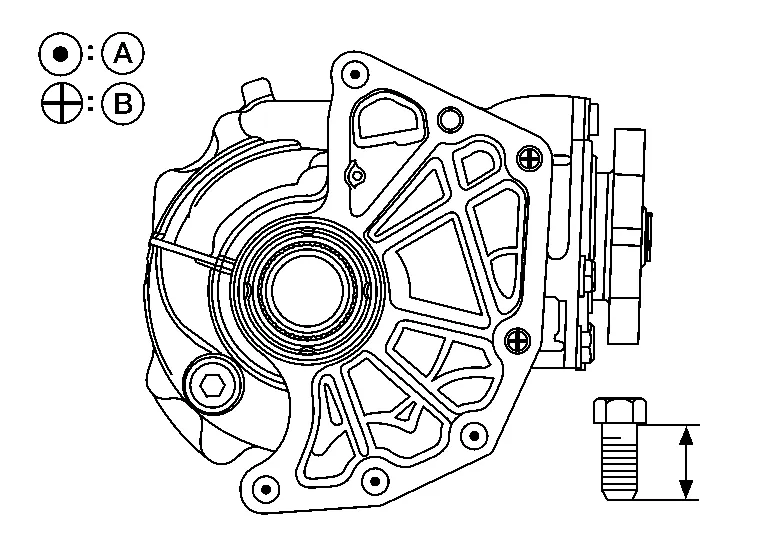
Bolt No. (A) (B) Quantity 4 2 Bolt length “ ” mm (in) 40 (1.57) 40 (1.57) CAUTION:
-
When installing transfer assembly to transaxle, be careful not to damage oil seal inside of CVT.
-
Do not reuse transfer assembly side oil seal.
-
Do not reuse transfer assembly O-ring.
-
-
Perform Inspection and Adjustment. Refer to Inspection and Adjustment.
INSPECTION BEFORE INSTALLATION
After inserting a torque converter to the CVT, check dimension (A) with in the reference value limit.
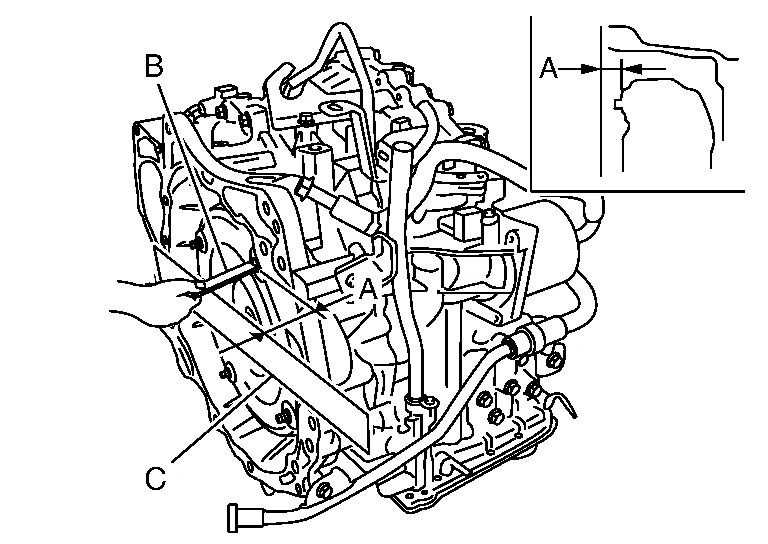
| B | : Scale |
| C |
: Straightedge Torque Converter |
| Dimension (A) | : Refer to Torque Converter. |
Adjustment After Installation
Perform the following:
-
Adjust CVT position. Refer to Adjustment.
-
Check and adjust the engine coolant level. Refer to Changing Engine Coolant.
-
Adjust the CVT fluid level. Refer to Adjustment.
-
Perform accelerator pedal released position learning. Refer to Description.
-
Perform throttle valve closed position learning. Refer to Description.
-
Perform front wheel alignment. Refer to Adjustment.
-
Perform adjustment of steering angle sensor neutral position. Refer to Description.
INSPECTION AFTER INSTALLATION
Check the following items:
-
CVT fluid leakage, refer to Inspection.
-
For CVT shifter position, refer to Inspection and Adjustment.
-
Start the engine and check for coolant leaks.
 Front Wheel Drive
Removal and Installation - FWD
RemovalWARNING:
Do not remove the radiator cap when the engine is hot. Serious burns could occur from high pressure engine coolant escaping from the radiator...

Other information:
Nissan Murano (Z52) 2015-2024 Service Manual: B13cf Buttons
DTC Description DTC DETECTION LOGIC DTC No. CONSULT screen terms (Trouble diagnosis content) DTC detection condition B13CF-73 Buttons (AV control unit) Diagnosis condition When ignition switch is ON. Signal (terminal) — Threshold — Diagnosis delay time — POSSIBLE CAUSEAV control unitFAIL-SAFEAV control unit buttons error DTC Confirmation Procedure PERFORM DTC CONFIRMATION PROCEDURE CONSULT Ignition switch ON...
Nissan Murano (Z52) 2015-2024 Service Manual: B1360 Combination Meter
DTC Description DTC DETECTION LOGIC DTC No. CONSULT screen terms (Trouble diagnosis content) DTC detection condition B1360–02 Combination meter (Combination meter connection error) Diagnosis condition When ignition switch is ON. Signal (terminal) — Threshold — Diagnosis delay time — POSSIBLE CAUSE AV communication circuit is open Combination meter FAIL-SAFESteering switch is inoperative DTC Confirmation Procedure PERFORM DTC CONFIRMATION PROCEDURE CONSULT Ignition switch ON...
Categories
- Manuals Home
- Nissan Murano Owners Manual
- Nissan Murano Service Manual
- Jacking up vehicle and removing the damaged tire
- GAS STATION INFORMATION
- Intelligent Forward Collision Warning (I-FCW)
- New on site
- Most important about car
LATCH (Lower Anchors and Tethers for CHildren) system
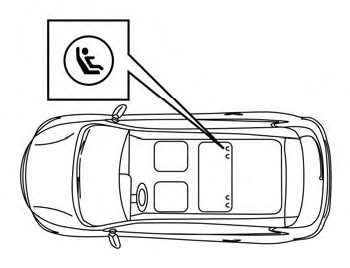
LATCH system lower anchor locations - bench seat
Your vehicle is equipped with special anchor points that are used with LATCH system compatible child restraints. This system may also be referred to as the ISOFIX or ISOFIX compatible system. With this system, you do not have to use a vehicle seat belt to secure the child restraint unless the combined weight of the child and child restraint exceeds 65 lbs. (29.5 kg). If the combined weight of the child and child restraint is greater than 65 lbs. (29.5 kg), use the vehicle’s seat belt (not the lower anchors) to install the child restraint. Be sure to follow the child restraint manufacturer’s instructions for installation.
