
Nissan Murano: Pre-driving checks and adjustments / Hood
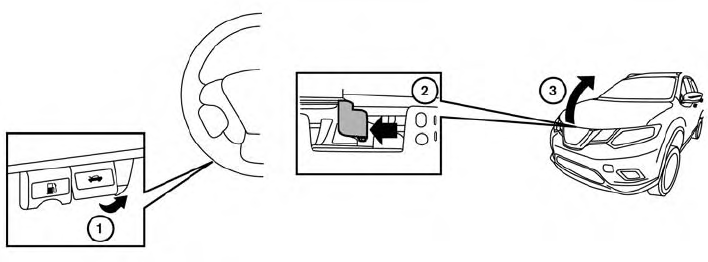
- Pull the hood lock release handle
 located below the driver side instrument
panel until the hood springs up
slightly.
located below the driver side instrument
panel until the hood springs up
slightly. - Locate the lever
 in between
the
hood and grille and push the lever sideways
with your fingertips and raise the
hood
in between
the
hood and grille and push the lever sideways
with your fingertips and raise the
hood  .
.
When closing the hood, lower the hood to approximately 12 in (30 cm) above the latch and release it. This allows proper engagement of the hood latch.
WARNING
- Make sure the hood is completely closed and latched before driving. Failure to do so could cause the hood to fly open and result in an accident.
- If you see steam or smoke coming from the engine compartment, to avoid injury do not open the hood.
 Conditions the Remote Engine Start will notwork
The Remote Engine Start will not operate if
any of the following conditions are present:
The ignition switch is placed in the ON
position.
The hood is not securely closed...
 Liftgate
WARNING
Always be sure the liftgate has been
closed securely to prevent it from
opening while driving.
Do not drive with the liftgate open.
This could allow dangerous exhaust
gases to be drawninto the vehicle...
Other information:
Nissan Murano (Z52) 2015-2024 Service Manual: U1000 Can Comm Circuit
DTC Description DESCRIPTIONCAN (Controller Area Network) is a serial communication line for real-time application. It is an on-Nissan Murano vehicle multiplex communication line with high data communication speed and excellent error detection ability...
Nissan Murano (Z52) 2015-2024 Owners Manual: Maximum trailer loads
Never allow the total trailer load to exceed the value specified in the “Towing Load/Specification” chart found in this section. The total trailer load equals trailer weight plus its cargo weight. The maximum Gross Combined Weight Rating (GCWR) should not exceed the value specified in the following Towing Load/Specification Chart...
Categories
- Manuals Home
- Nissan Murano Owners Manual
- Nissan Murano Service Manual
- Power Steering Fluid (PSF)
- Warning lights
- Jacking up vehicle and removing the damaged tire
- New on site
- Most important about car
Autolight system
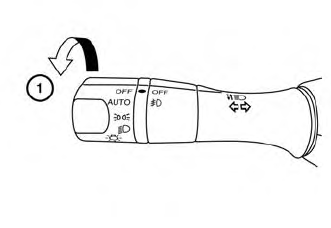
The autolight system allows the headlights to turn on and off automatically. The autolight system can:
Turn on the headlights, front parking, tail, license plate and instrument panel lights automatically when it is dark. Turn off all the lights (except daylight running lights) when it is light. Keep all the lights on for a period of time after you place the ignition switch in the OFF position and all doors are closed.
Copyright © 2026 www.nimurano.com