
Nissan Murano: Security Control System :: Dtc/circuit Diagnosis / B260f Eng State Sig Lost
DTC DETECTION LOGIC
| DTC No. | CONSULT screen terms (Trouble diagnosis content) | DTC Detection Condition | |
|---|---|---|---|
| B260F |
ENG STATE SIG LOST (Engine state signal lost) |
Diagnosis condition | When ignition switch is ON. |
| Signal (terminal) | — | ||
| Threshold | BCM has not yet received the engine status signal from ECM when ignition switch is in the ON position. | ||
| Diagnosis delay time | — | ||
POSSIBLE CAUSE
-
Harness or connectors
(The CAN communication line is open or shorted.)
-
ECM
FAIL-SAFE
Inhibit engine cranking
CHECK DTC PRIORITY
If DTC B260F is displayed with DTC U1000 or U1010, first perform the trouble diagnosis for DTC U1000 or U1010.
Is applicable DTC detected?
YES>>Perform diagnosis of applicable. U1000: Refer to DTC Description. U1010: Refer to DTC Description.
NO>>GO TO 2.
PERFORM DTC CONFIRMATION PROCEDURE
 CONSULT
-
Ignition switch ON and wait 2 seconds or more.
-
Select “Self Diagnostic Result” mode of “BCM”.
-
Check DTC.
Is DTC detected?
YES>>Refer to Diagnosis Procedure.
NO>>To check malfunction symptom before repair: Refer to Intermittent Incident.
NO>>Confirmation after repair: Inspection End.
CHECK DTC PRIORITY
If DTC B260F is displayed with DTC U1000 or U1010, first perform the trouble diagnosis for DTC U1000 or U1010.
Is applicable DTC detected?
YES>>Perform diagnosis of applicable. U1000: Refer to DTC Description. U1010: Refer to DTC Description.
NO>>GO TO 2.
INSPECTION START
-
Ignition switch ON.
-
Select “Self Diagnostic Result” mode of “BCM”.
-
Touch “ERASE”.
-
Perform DTC CONFIRMATION PROCEDURE for DTC B260F. Refer to DTC Confirmation Procedure.
Is DTC detected?
YES>>GO TO 3.
NO>>Inspection End.
REPLACE ECM
Replace ECM. Refer Removal and Installation.
>>
Inspection End.
 B2608 Starter Relay
DTC Description
DTC DETECTION LOGICNOTE:
If DTC B2608 is displayed with DTC U1000, first perform the trouble diagnosis for DTC U1000. Refer to DTC Description...
 B261e Vehicle Type
DTC Description
DTC DETECTION LOGICNOTE:
If DTC B261E is displayed with DTC U1000, first perform the trouble diagnosis for DTC U1000. Refer to DTC Description...
Other information:
Nissan Murano (Z52) 2015-2024 Service Manual: B26ff Intelligent Tuner Comm Err
DTC Description DTC DETECTION LOGIC DTC No. CONSULT screen terms (Trouble diagnosis content) DTC Detection Condition B26FF INTELLIGENT TUNER COMM ERR (Intelligent tuner communication error) Diagnosis condition When ignition switch is ON. Signal (terminal) BCM terminal 119 Threshold Inactive communication between BCM and remote keyless entry receiver Diagnosis delay time — POSSIBLE CAUSE Remote keyless entry receiver Harness or connector BCM FAIL-SAFE— DTC Confirmation Procedure PERFORM DTC CONFIRMATION PROCEDURE CONSULT Ignition switch ON...
Nissan Murano (Z52) 2015-2024 Service Manual: C1b52-17 Blind Spot Warning Indicator Open Circuit
DTC Description DTC DETECTION LOGIC DTC No. CONSULT screen terms (Trouble diagnosis content) DTC detection condition C1B52-17 BSW/BSI IND OPEN CIR (Blind Spot Warning indicator open circuit) Diagnosis condition When ignition switch is ON. Signal (terminal) – Threshold Open circuit in Blind Spot Warning indicator circuit is detected Diagnosis delay time – POSSIBLE CAUSE Blind Spot Warning indicator LH circuit Blind Spot Warning indicator LH Side radar LH FAIL-SAFEThe following systems are canceled: Blind Spot Warning (BSW) Rear Cross Traffic Alert (RCTA) DTC Confirmation Procedure PERFORM DTC CONFIRMATION PROCEDURE CONSULT Start the engine...
Categories
- Manuals Home
- Nissan Murano Owners Manual
- Nissan Murano Service Manual
- Checking engine oil level
- All-Wheel Drive (AWD) (if so equipped)
- Turning the AEB system on/off
- New on site
- Most important about car
Driver and passenger supplemental knee air bag
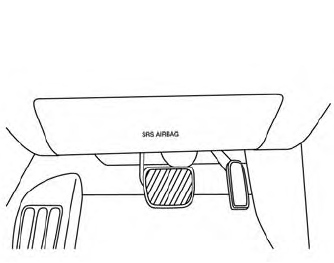
Driver’s side
The knee air bag is located in the knee bolster, on the driver’s and passenger’s side. All of the information, cautions and warnings in this manual apply and must be followed. The knee air bag is designed to inflate in higher severity frontal collisions, although it may inflate if the forces in another type of collision are similar to those of a higher severity frontal impact. It may not inflate in certain collisions.
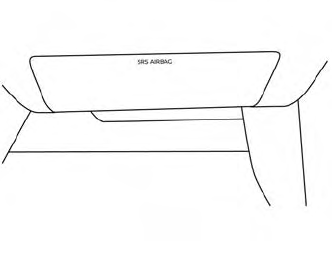
Passenger’s side
