
Nissan Murano: System / Intake Valve Timing Control
SYSTEM DIAGRAM
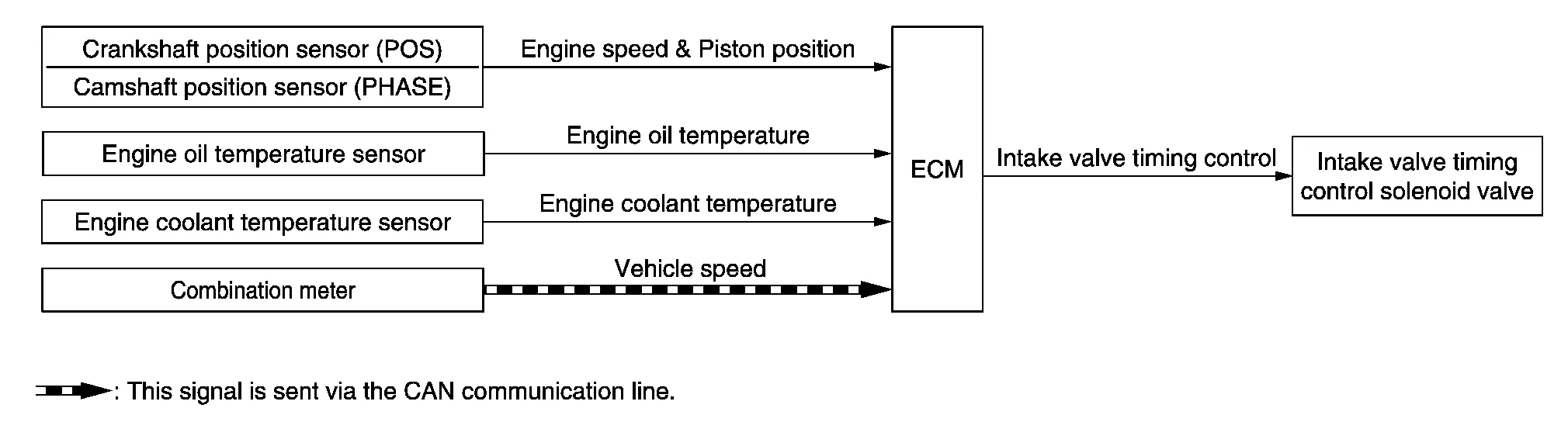
System Description
INTAKE VALVE TIMING CONTROL
System Description
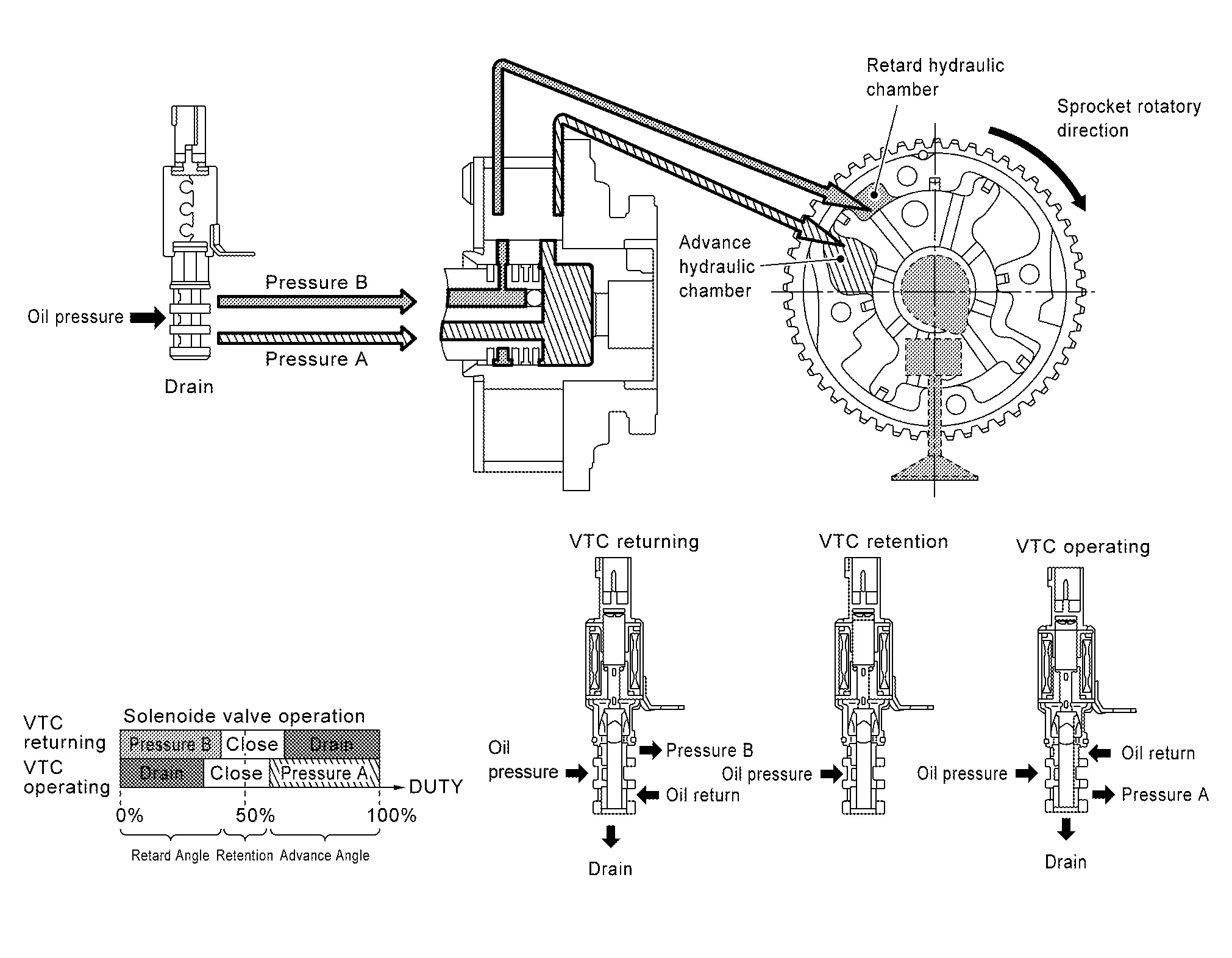
This mechanism hydraulically controls cam phases continuously with the fixed operating angle of the intake valve.
The ECM receives signals such as crankshaft position, camshaft position, engine speed, and engine coolant temperature. Then, the ECM sends ON/OFF pulse duty signals to the intake valve timing (IVT) control solenoid valve depending on driving status. This makes it possible to control the shut/open timing of the intake valve to increase engine torque in low/mid speed range and output in high-speed range.
INTAKE VALVE TIMING INTERMEDIATE LOCK CONTROL
System Diagram
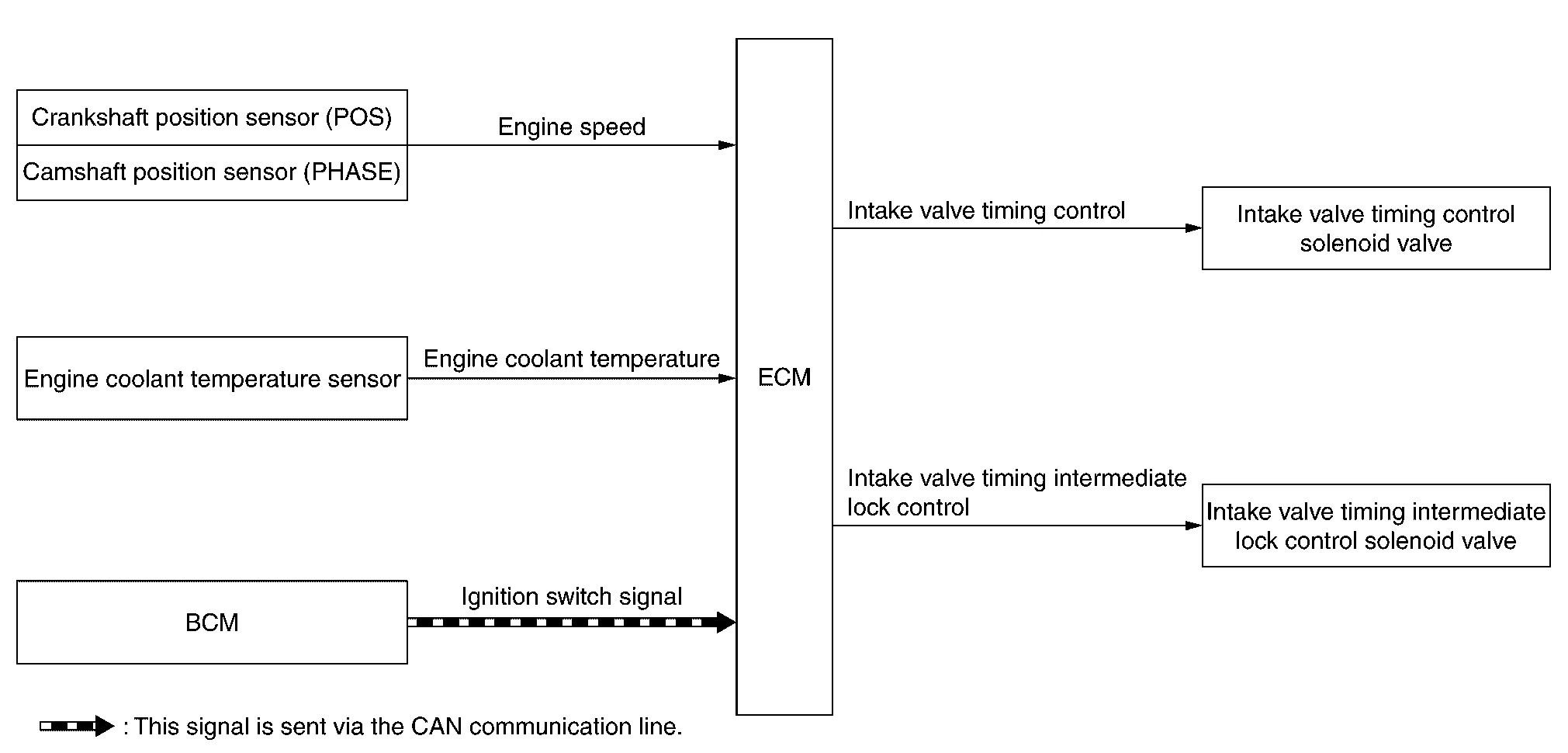
System Description
The intake valve timing intermediate lock control improves the cleaning ability of exhaust gas at cold starting by fixing the camshaft sprocket (INT) with two lock pins and bringing the cam phase into intermediate phase.
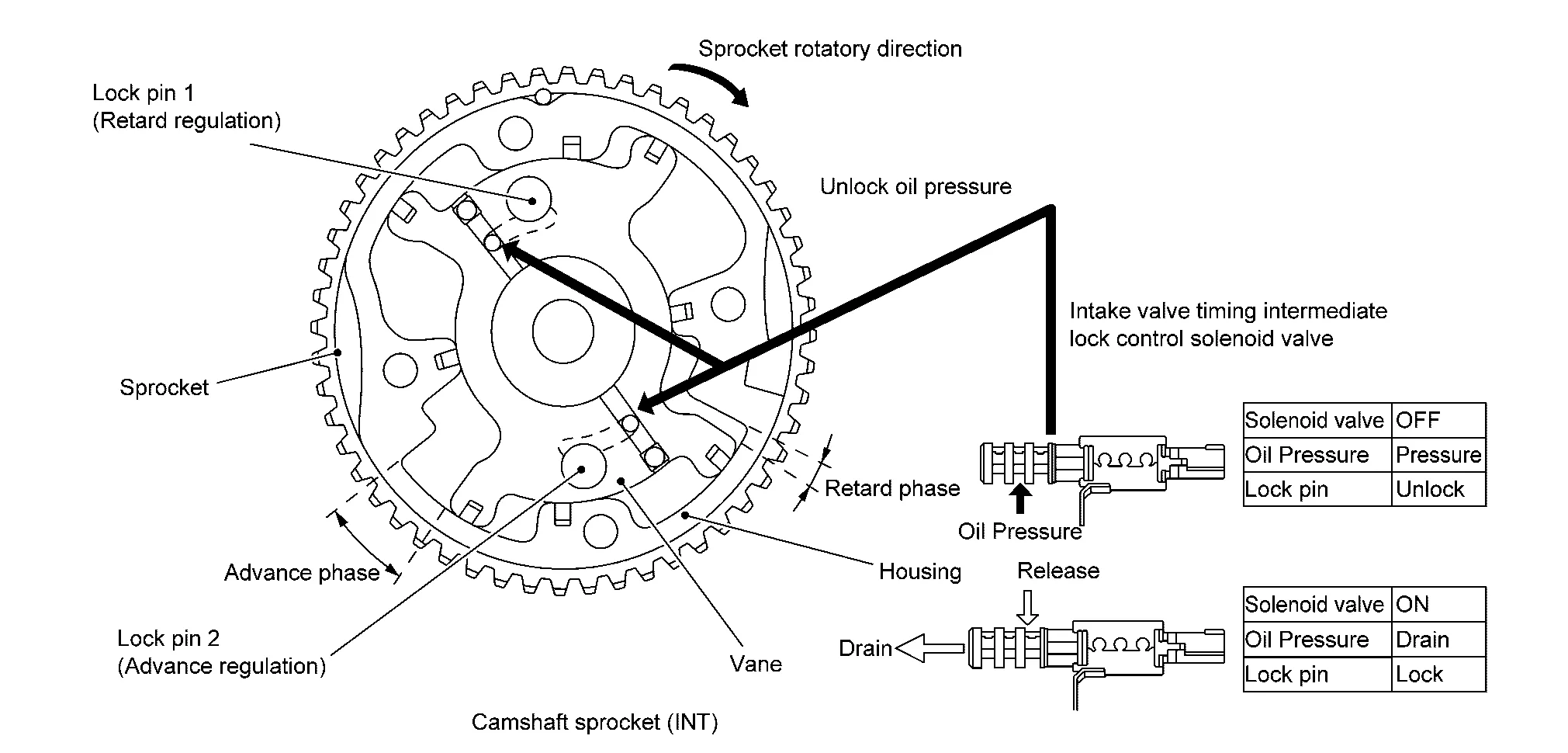
Cam phase is fixed at the intermediate phase by two lock pins in the camshaft sprocket (INT). ECM controls the intermediate phase lock by opening/closing the intake valve timing intermediate lock control solenoid valve to control oil pressure acting on the lock pin and locking/unlocking the lock pin.
Lock/Unlock Activation
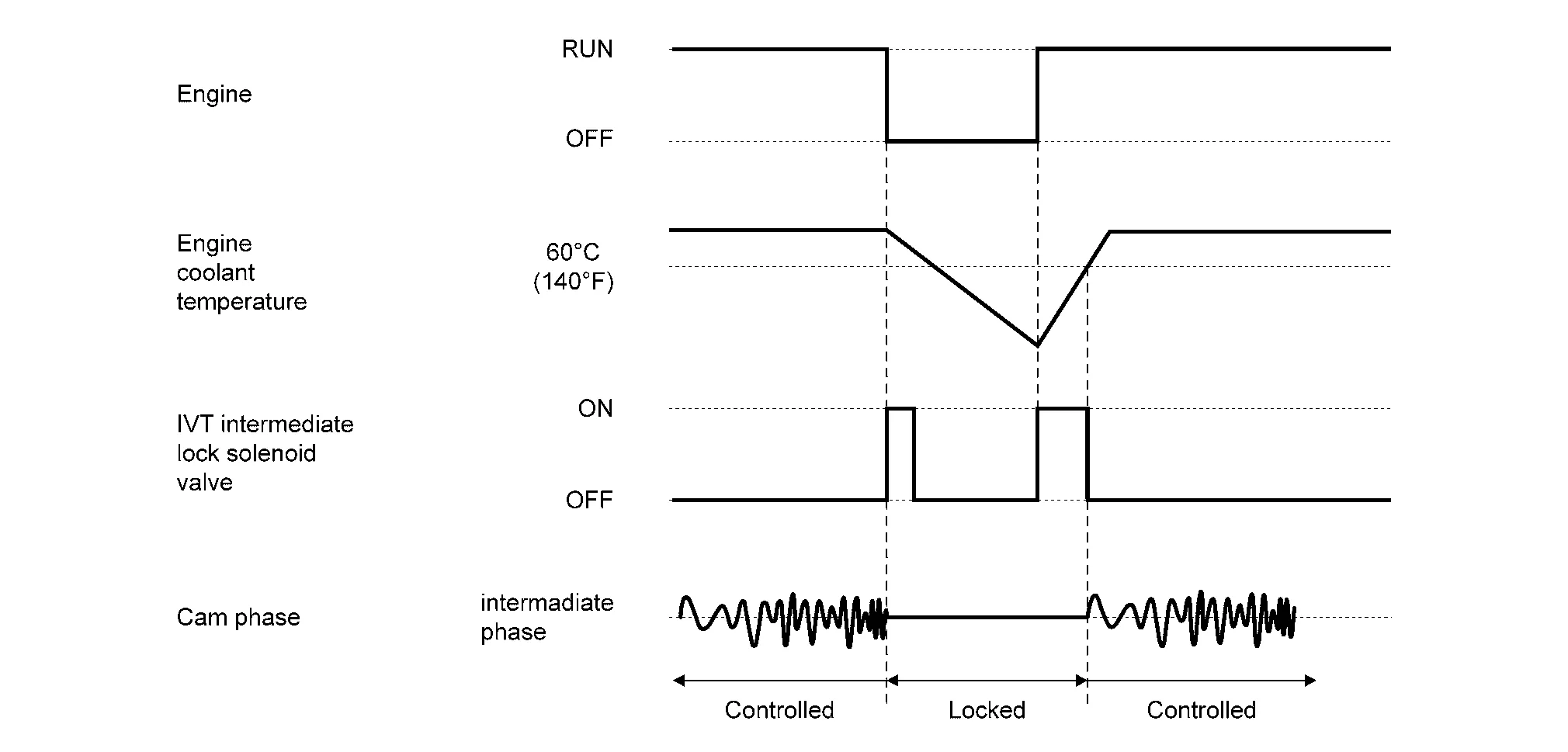
When the ignition switch is turned OFF from the idle state, ECM activates the intake valve timing intermediate lock control solenoid valve to drain oil pressure. Accordingly, the lock pin is activated by the spring, and the cam phase is fixed at the intermediate position.
When starting the engine by cold start, ECM activates the solenoid valve to maintain the condition that the cam phase is fixed at the intermediate position.
When the engine coolant temperature exceeds 60°C (140°F), ECM turns OFF the solenoid valve and starts normal intake valve timing control.
 Throttle Control
System Description
SYSTEM DIAGRAM*: ECM determines the start signal status by the signals of engine speed and battery voltage.SYSTEM DESCRIPTIONECM calculates the value of signal transmitted from the accelerator pedal and activates the throttle valve by transmitting a control signal to the electric throttle control actuator...
 Exhaust Valve Timing Control
System Description
SYSTEM DIAGRAMINPUT/OUTPUT SIGNAL CHART Sensor Input signal to ECM ECM function Actuator
Crankshaft position sensor (POS)
Engine speed and piston position
Exhaust valve timing control
Exhaust valve timing control solenoid valve
Camshaft position sensor (PHASE)
Engine oil temperature sensor
Engine oil temperature
Exhaust valve timing control position sensor
Exhaust valve timing signal
Combination meter
CAN communication
Nissan Murano Vehicle speed signal
SYSTEM DESCRIPTIONThis mechanism hydraulically controls cam phases continuously with the fixed operating angle of the exhaust valve...
Other information:
Nissan Murano (Z52) 2015-2024 Owners Manual: If your vehicle overheats
WARNING Donot continue to drive if your vehicle overheats. Doing so could cause engine damage or a vehicle fire. To avoid the danger of being scalded, never remove the radiator or coolant reservoir cap while the engine is still hot. When the radiator or coolant reservoir cap is removed,pressurized hot water will spurt out, possibly causing serious injury...
Nissan Murano (Z52) 2015-2024 Service Manual: Telescopic Sensor
Component Function Check DATA MONITOR CONSULT Select “TELESCO PULSE” in “Data Monitor” mode of “AUTO DRIVE POS.”. Check that the function operates normally according to the following conditions: Monitor item Condition Value TELESCO PULSE Steering column Operate (forward) Change (decrease) Operate (backward) Change (increase) Release No change Is the inspection result normal? YES>> Inspection End...
Categories
- Manuals Home
- Nissan Murano Owners Manual
- Nissan Murano Service Manual
- All-Wheel Drive (AWD) (if so equipped)
- Indicator lights
- Power Steering Fluid (PSF)
- New on site
- Most important about car
Seatback pockets
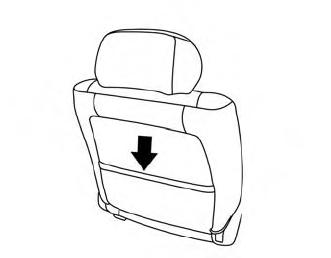
Theremaybe one or two seatback pockets located on the back of the driver and passenger seats. The pockets can be used to store maps.
WARNING
