Nissan Murano: Appearance and care / Corrosion protection
Most common factors contributing to vehicle corrosion
Most vehicle corrosion is caused by:
- The accumulation of moistureretaining dirt and debris in body panel sections, cavities, and other areas.
- Damage to paint and other protective coatings caused by gravel and stone chips or minor traffic collisions.
Environmental factors influence the rate of corrosion
Moisture
Accumulation of sand, dirt and water on the vehicle body underside can accelerate corrosion. Wet floor coverings will not dry completely inside the vehicle and should be removed for drying to avoid floor panel corrosion.
Relative humidity
Corrosion will be accelerated in areas of high relative humidity, especially those areas where the temperatures stay above freezing and where atmospheric pollution exists and road salt is used.
Temperature
High temperatures accelerate the rate of corrosion to those parts which are not well ventilated.
Air pollution
Industrial pollution, the presence of salt in the air in coastal areas, or heavy road salt use accelerates the corrosion process. Road salt also accelerates the disintegration of paint surfaces.
Protect your vehicle from corrosion
- Wash and wax your vehicle often to keep the vehicle clean.
- Always check for minor damage to the paint and repair it as soon as possible.
- Keep drain holes at the bottom of the doors open to avoid water accumulation.
- Check the underbody for accumulation of sand, dirt or salt. If present, wash with water as soon as possible.
CAUTION
- NEVER remove dirt, sand or other debris from the passenger compartment by washing it out with a hose. Remove dirt with a vacuum cleaner or broom.
- Never allow water or other liquids to come in contact with electronic components inside the vehicle as this may damage them.
Chemicals used for road surface de-icing are extremely corrosive. They accelerate corrosion and deterioration of underbody components such as the exhaust system, fuel and brake lines, brake cables, floor pan and fenders.
In winter, the underbody must be cleaned periodically.
For additional protection against rust and corrosion, which may be required in some areas, it is recommended that you visit a NISSAN dealer.
 Cleaning the seat tracks
CAUTION
Periodically clean the seat tracks to prevent
reduction of ability to move the
seats.
Clean periodically with a high-powered
vacuum cleaner...

Other information:
Nissan Murano (Z52) 2015-2024 Service Manual: Fluid Cooler Fluid Warmer System
System Description CVT FLUID COOLER SCHEMATICCOMPONENT DESCRIPTIONCVT Oil Warmer The CVT oil warmer (1) is installed on the front part of transaxle assembly. When engine is started while engine and CVT are cold, engine coolant temperature rises more quickly than CVT fluid temperature...
Nissan Murano (Z52) 2015-2024 Service Manual: B2608 Starter Relay
DTC Description DTC DETECTION LOGICNOTE: If DTC B2608 is displayed with DTC U1000, first perform the trouble diagnosis for DTC U1000. Refer to DTC Description. If DTC B2608 is displayed with DTC U1010, first perform the trouble diagnosis for DTC U1010...
Categories
- Manuals Home
- Nissan Murano Owners Manual
- Nissan Murano Service Manual
- Tire rotation
- High Beam Assist (if so equipped)
- Settings
- New on site
- Most important about car
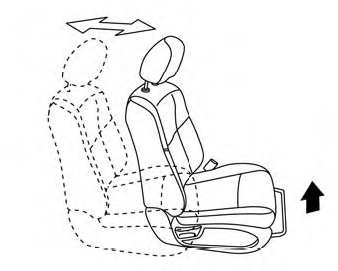
Front manual seat adjustment (if so equipped)
Your vehicle seats can be adjusted manually. For additional information about adjusting the seats, refer to the steps outlined in this section.
Forward and backward